Editorial & Publication Information
60 Days
Typical Time to Final Decision
English
Publication Language
Single-Blind
Peer-Review Model
The stated decision time and acceptance rate are journal-level indicators
and may vary over time. Editorial decisions depend on manuscript quality,
scope relevance, methodological and ethical assessment, reviewer
availability, revision requirements, and author response times.
Similarity screening forms part of the journal's editorial assessment
and is not interpreted solely on the basis of a numerical similarity score.
About the Journal
Overview
The Oncology Therapeutics and Drug Development is a multidisciplinary, peer-reviewed journal dedicated to the dissemination of scholarly research in cancer therapeutics, oncology drug development, and related pharmaceutical sciences. The journal considers research addressing the discovery, development, optimization, and evaluation of anticancer agents, including small molecules, biologics, targeted therapies, immunotherapies, and combination treatment strategies.
The journal's scope covers a broad range of oncology drug-development research, including preclinical and mechanistic studies, translational research, pharmacology, pharmacokinetics and pharmacodynamics, clinical studies and trial findings, biomarker research, therapeutic optimization, drug resistance, and related areas of cancer therapeutics.
The journal also welcomes research involving emerging and interdisciplinary approaches relevant to oncology, including nanomedicine, precision oncology, computational and artificial-intelligence-assisted drug discovery, advanced drug-delivery systems, and other technologies that support the investigation and development of cancer therapies.
The Oncology Therapeutics and Drug Development provides a scholarly platform for researchers, clinicians, pharmacologists, pharmaceutical scientists, and other professionals to communicate research findings and scientific developments relevant to oncology therapeutics and drug development. Manuscripts are considered in accordance with the journal's scope, editorial policies, ethical requirements, and peer-review procedures.
The journal is committed to responsible scholarly communication, research integrity, transparent editorial practices, accurate publication metadata, and the dissemination of scientifically rigorous research in the field of oncology therapeutics and drug development.
Aim and Scope
The Oncology Therapeutics and Drug Development is a peer-reviewed, open-access journal committed to advancing scientific research and innovation in the development of anticancer therapies. The journal serves as an international platform for the publication of high-quality research, breakthrough discoveries, and emerging therapeutic approaches that contribute to improved cancer treatment, drug discovery, and clinical outcomes.
The journal covers a comprehensive range of topics related to oncology therapeutics and drug development, including but not limited to:
Cancer Biology & Molecular Oncology
- Tumor biology, signaling pathways, oncogenes, tumor suppressors, and microenvironment studies
- Molecular mechanisms of cancer progression, metastasis, and invasion
- Biomarker discovery, prognostic indicators, and molecular diagnostics
Targeted Therapies & Precision Oncology
- Development and evaluation of small molecules, monoclonal antibodies, and peptide-based therapies
- Precision medicine approaches, genetic and molecular profiling for individualized treatment
- Resistance mechanisms and strategies to overcome therapeutic resistance
Immuno-Oncology & Cell-Based Therapies
- Immune checkpoint inhibitors, cancer vaccines, and adoptive cell therapies (CAR-T, TILs)
- Tumor-immune interactions, immune modulation, and microenvironment targeting
- Combination immunotherapies and translational studies
Drug Discovery & Preclinical Development
- High-throughput screening, lead optimization, and structure-based drug design
- Pharmacokinetics, pharmacodynamics, and preclinical efficacy evaluation
- In vitro and in vivo models for cancer therapeutics development
Clinical Trials & Translational Research
- Early-phase and late-phase clinical trials in oncology
- Biomarker-driven patient stratification and trial design
- Safety, efficacy, and outcome measures in therapeutic evaluation
Nanomedicine & Advanced Drug Delivery in Oncology
- Nanoparticle-based drug carriers, liposomes, and polymeric systems
- Targeted delivery, controlled release, and tumor-specific therapeutics
- Toxicity, biocompatibility, and translational nanomedicine studies
Computational Oncology & AI in Drug Development
- In silico modeling, molecular docking, and drug-target interaction simulations
- AI/ML-based predictive models for drug efficacy and toxicity
- Systems biology approaches for personalized therapy design
Emerging Therapies & Translational Innovations
- Novel therapeutic modalities such as epigenetic drugs, RNA therapeutics, and oncolytic viruses
- Combination strategies integrating chemotherapy, immunotherapy, and targeted agents
- Regulatory, ethical, and commercialization considerations in oncology drug development
Cancer Biology & Molecular Mechanisms
- Oncogenic signaling pathways, tumor suppressor networks, and epigenetic regulation
- Tumor microenvironment, angiogenesis, hypoxia, and stromal interactions
- Cancer stem cells, epithelial-to-mesenchymal transition (EMT), and metastasis
- Molecular biomarkers for diagnosis, prognosis, and therapeutic response
Targeted Therapies & Precision Oncology
- Small molecule inhibitors, monoclonal antibodies, and receptor-targeted drugs
- Gene- and pathway-specific therapy development
- Overcoming drug resistance, tumor heterogeneity, and adaptive therapy strategies
- Companion diagnostics and precision medicine approaches
Immuno-Oncology & Advanced Cellular Therapies
- Immune checkpoint blockade (PD-1, PD-L1, CTLA-4) and immune modulation
- Adoptive cell therapies (CAR-T, TCR, NK cells) and tumor-infiltrating lymphocytes (TILs)
- Cancer vaccines, cytokine therapies, and combination immunotherapies
- Tumor-immune microenvironment studies and immunotherapy biomarkers
Drug Discovery, Preclinical & Translational Research
- High-throughput drug screening, combinatorial therapy testing, and lead optimization
- Pharmacokinetics, pharmacodynamics, toxicology, and preclinical efficacy evaluation
- In vitro 3D tumor models, organoids, patient-derived xenografts (PDX)
- Translational studies bridging lab findings to clinical trials
Clinical Development & Trials in Oncology
- Phase I–IV clinical trials, trial design, endpoints, and patient stratification
- Biomarker-driven and adaptive clinical trial methodologies
- Evaluation of safety, efficacy, and treatment outcomes
- Regulatory frameworks, ethical considerations, and clinical trial reporting
Nanomedicine & Targeted Drug Delivery Systems
- Nanoparticle-based therapeutics, liposomes, micelles, and dendrimers
- Tumor-targeted delivery, controlled release, and pharmacological optimization
- Theranostics combining diagnostics and therapeutics at the nanoscale
- Toxicity assessment, biocompatibility, and translational nanomedicine research
Gene & RNA-Based Therapeutics
- RNA therapeutics, including siRNA, miRNA, mRNA-based treatments
- CRISPR/Cas gene editing and genome-targeted oncology therapies
- Viral vectors, oncolytic viruses, and gene-modified cellular therapies
- Epigenetic modulators and chromatin-targeting drugs
Computational Oncology & Artificial Intelligence Applications
- Drug-target interaction modeling, molecular docking, and predictive toxicology
- AI/ML-based identification of drug candidates and personalized therapy prediction
- Systems biology and network pharmacology in cancer therapy design
- Big data analytics for patient stratification and clinical outcome prediction
Emerging Therapies & Translational Innovations
- Combination therapies integrating chemotherapy, targeted therapy, and immunotherapy
- Novel small molecules, peptides, and biologics for hard-to-treat cancers
- Organoids, lab-on-chip, and personalized tumor models for therapy testing
- Policy, regulatory, and ethical considerations in oncology drug development
The journal publishes original research articles, reviews, short communications, case studies, clinical trial reports, and expert perspectives that meaningfully advance the understanding and development of innovative cancer therapeutics.
The Oncology Therapeutics and Drug Development aims to foster collaboration among oncologists, pharmaceutical scientists, researchers, clinicians, industry experts, and policymakers to accelerate the discovery and delivery of effective cancer treatments worldwide. By promoting scientific excellence and knowledge exchange, the journal strives to support the global effort to reduce the burden of cancer through enhanced drug development and therapeutic innovation.
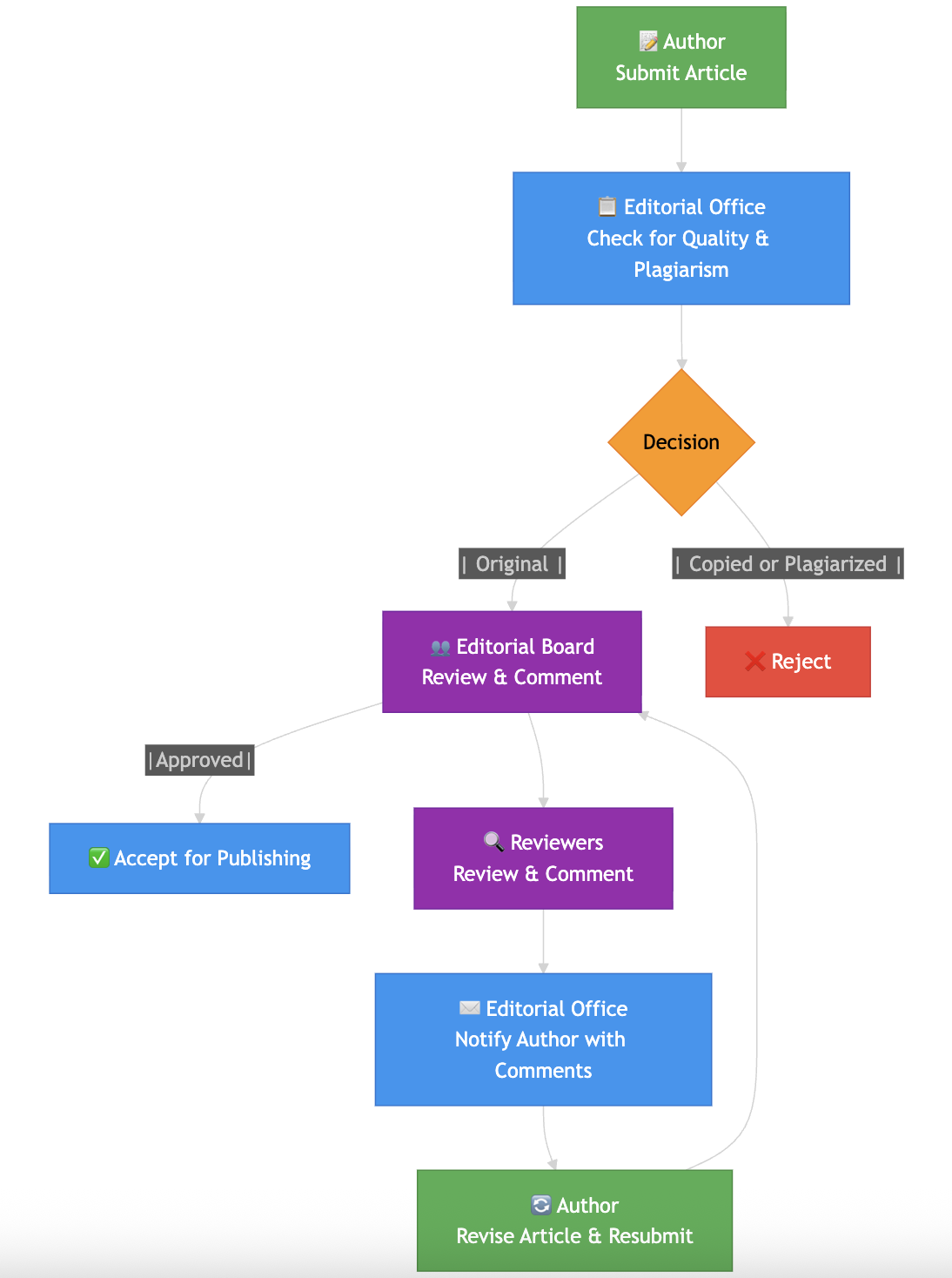
Editorial and Peer-Review Policy
Oncology Therapeutics and Drug Development
follows the editorial and peer-review procedures described in the
journal's policies and author guidelines. Manuscripts are assessed
for relevance to the journal's scope, originality, scientific merit,
methodological considerations, ethical compliance, and suitability
for publication.
Key features include:
-
Manuscripts are evaluated by appropriate reviewers and/or editors
with relevant subject expertise, according to the journal's
stated peer-review model.
-
The applicable peer-review model and reviewer confidentiality
arrangements are described in the journal's policies.
-
Editorial assessment considers scientific relevance, originality,
methodological quality, ethical compliance, and alignment with
the journal's scope.
-
Manuscripts undergo appropriate originality, plagiarism, and
research-integrity checks before or during the editorial process.
-
Final publication decisions are made by the responsible editor
in accordance with the journal's editorial policies and the
outcome of the applicable review process.
Publication Frequency & Format
The journal's publication frequency is
Annual (One issue per year).
Accepted articles are made available online in HTML and PDF formats
following completion of the applicable editorial and production processes,
supporting accessible and timely dissemination of published research.
Open Access Policy
Oncology Therapeutics and Drug Development
operates under an open-access publishing model. Published content is
freely accessible to readers without subscription or paywall
restrictions, subject to the applicable journal policies and licensing
terms.
Copyright, licensing, and reuse rights are governed by the terms
specified for the journal and individual published content.
Indexing & Archiving
The Oncology Therapeutics and Drug Development
seeks to make its published research discoverable through appropriate
scholarly indexing, abstracting, and discovery services. Inclusion in
any external indexing or abstracting service is subject to the
eligibility requirements, evaluation procedures, and acceptance
decisions of the respective service.
The journal is committed to maintaining accurate article metadata,
persistent identifiers, accessible article landing pages, and the
continued availability of published scholarly content.
Information about indexing, abstracting, discovery, and preservation
services is provided on a service-specific basis and is updated when
the relevant status has been established and verified.
Manuscript Submission
Authors are encouraged to submit their manuscripts through the journal's Online Submission
System (Submit Manuscript).
Manuscripts must adhere to the journal's author guidelines regarding structure, formatting,
referencing style, ethical approvals, and necessary disclosures (such as conflicts of interest
and funding).
Publication Ethics & Integrity
Oncology Therapeutics and Drug Development follows internationally recognized standards for publication ethics and research integrity,
which include (but are not limited to):
- Make sure you have ethical approval.
- Ensure that informed consent is obtained where required and protect the confidentiality and privacy of participants and research subjects.
- Declare any conflicts of interest.
- Be transparent about data availability.
- Clarify authorship criteria and the roles of contributors.
- Conduct anti-plagiarism checks.
- Have a clear policy for retraction and correction.














 Abstract
 HTML
HTML
 PDF
PDF