About the Journal
Overview
In our rapidly evolving and interconnected world, understanding the expanding landscape of Intelligent and Multidisciplinary Computing has become more important than ever. The fusion of advanced computational technologies with diverse scientific and societal domains continually challenges the boundaries of traditional academic disciplines. As digital systems, global industries, scientific discovery, and societal needs advance, research priorities reflect a complex interplay of technological innovation, environmental conditions, human behavior, and organizational dynamics. This evolving environment demands new approaches that rely on intelligent systems capable of adapting to complexity and delivering meaningful insights.
Intelligent and multidisciplinary computing-covering artificial intelligence, machine learning, deep learning, neural networks, data science, cognitive computing, automation, and computational modeling-now plays a central role across computer science, engineering, social sciences, natural sciences, and applied research fields. These technologies drive progress in areas such as algorithm optimization, robotics, human-computer interaction, cybersecurity, big data analytics, natural language processing, computer vision, digital transformation, cloud and edge computing, distributed systems, and quantum computing. As these domains develop, researchers also explore the cognitive, behavioral, and ethical dimensions of technology, enhancing the human-centered nature of intelligent systems and ensuring responsible implementation.
At the same time, the study of intelligent and multidisciplinary computing extends into a broad spectrum of academic fields, including electrical and electronics engineering, mechanical and civil engineering, mechatronics, environmental engineering, industrial engineering, transportation systems, and smart energy technologies. Scientific disciplines such as applied mathematics, operations research, optimization theory, computational statistics, bioinformatics, computational physics, and computational chemistry provide critical foundations for building high-performance models and analytical frameworks. In health and life sciences, areas such as biomedical engineering, medical imaging, health informatics, digital health, telemedicine, biostatistics, neuroscience, and brain-computer interfaces demonstrate how intelligent computing supports diagnosis, treatment, and scientific discovery.
The reach of intelligent and multidisciplinary computing also extends into business, economics, and management through financial technology, business intelligence, risk modeling, supply-chain optimization, innovation management, entrepreneurship research, and management information systems. In the humanities and social sciences, fields such as digital humanities, computational social science, cognitive psychology, educational technology, social network analysis, ergonomics, and the ethics of artificial intelligence enrich our understanding of how technology intersects with culture, behavior, and society. Environmental and earth sciences likewise benefit, as researchers apply intelligent computing to climate informatics, environmental modeling, agricultural informatics, geospatial analysis, and sustainable technology development-areas vital for addressing global environmental challenges.
The Journal of Intelligent and Multidisciplinary Computing embraces this expansive and interconnected landscape by offering an open-access platform for students, practitioners, academics, and researchers working across these diverse fields. The journal welcomes original, high-impact contributions that advance intelligent and multidisciplinary computing and its applications across sciences, engineering, humanities, health, business, and environmental studies. By supporting a wide range of subjects, the journal fosters collaboration and encourages the development of innovative solutions that cut across conventional boundaries.
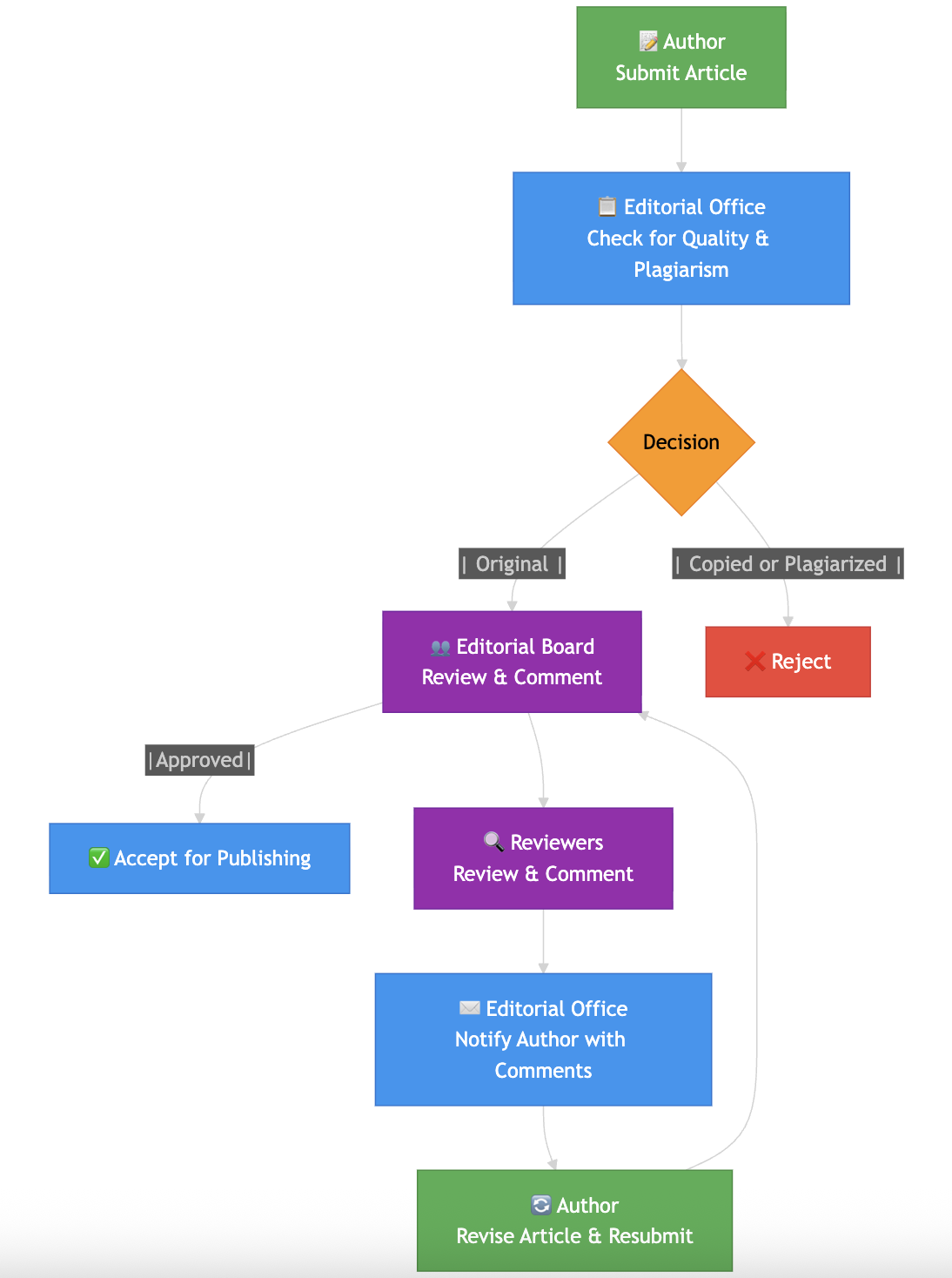
Peer-reviewed publications serve as essential resources for both academic and industry communities, helping researchers stay informed about the latest technologies, methodologies, and theoretical advancements. As a respected digital resource, the Journal of Intelligent and Multidisciplinary Computing promotes global knowledge sharing through timely publication and open scientific dialogue. Its fair and efficient review process ensures that manuscripts submitted through its Online Submission System are evaluated by qualified editorial board members or external experts, with acceptance requiring the approval of at least two reviewers and the editor.
Aim and Scope
Journal of Intelligent and Multidisciplinary Computing publishes original research articles, reviews, short communications, case studies, and technical perspectives that explore every aspect of intelligent computing and its multidisciplinary applications. We welcome submissions in a variety of thematic areas, including (but not limited to):
Artificial Intelligence & Machine Learning
- Supervised, unsupervised, and reinforcement learning algorithms
- Deep learning architectures, neural networks, and advanced model optimization
- Explainable AI (XAI), trustworthy AI, and human-AI interaction
- Pattern recognition, computer vision, and intelligent decision-making systems
Data Science, Big Data & Analytics
- Big data processing, distributed computing, and cloud-based analytics
- Data mining, feature engineering, and predictive modeling
- Data visualization, information retrieval, and knowledge discovery
- Scalable algorithms for high-dimensional and real-time data
Cybersecurity, Privacy & Intelligent Systems
- AI-driven threat detection, intrusion prevention, and cybersecurity frameworks
- Cryptography, secure communication, and privacy-preserving computation
- Blockchain, decentralized systems, and secure distributed architectures
- Risk assessment and intelligence-based cyber resilience mechanisms
Internet of Things (IoT) & Smart Systems
- IoT architectures, sensor networks, and intelligent embedded systems
- Smart homes, smart cities, and automated industrial systems (Industry 4.0)
- Edge computing, fog computing, and resource-optimized systems
- Cyber-physical systems and real-time intelligent monitoring platforms
Robotics, Automation & Human-Machine Interaction
- Autonomous robots, robotic perception, and motion planning
- Intelligent control systems, automation frameworks, and robotic cognition
- Haptics, interaction design, and adaptive human-robot collaboration
- Swarm robotics, cooperative systems, and multi-agent coordination
Computational Intelligence & Optimization
- Evolutionary algorithms, swarm intelligence, and bio-inspired computing
- Fuzzy logic, neural-fuzzy systems, and hybrid intelligent approaches
- Optimization techniques for complex, large-scale, or nonlinear problems
Multidisciplinary Computing Applications
- AI in healthcare, bioinformatics, medical imaging, and diagnostics
- AI-driven solutions in finance, business intelligence, and economics
- Smart agriculture, environmental monitoring, and sustainable technologies
- Intelligent systems for education, transportation, and social sciences
Emerging Technologies & Interdisciplinary Innovation
- Quantum computing, neuromorphic systems, and future computing paradigms
- Digital twins, simulation-based intelligence, and virtual/augmented reality
- Technology integration, scalability, and real-world system deployments
- Policy, governance, ethics, and societal impacts of intelligent technologies
Editorial and Peer-Review Policy
Journal of Intelligent and Multidisciplinary Computing adheres to a strict single-blind peer-review process to maintain the quality, integrity,
and scientific validity of all published work.
Key features include:
-
Each manuscript is reviewed by independent experts in the relevant field, along with oversight from an academic editor.
-
Reviewers can see author details, but the identities of the reviewers remain hidden from the authors.
-
The evaluations emphasize scientific merit, originality, methodological rigor, ethical
compliance, and how well the work fits within the journal's scope.
-
Every submission goes through plagiarism checks and ethical compliance assessments
before the review process begins.
-
The final decision on publication is based on the reviewer's recommendations and the
editor's evaluation.
Publication Frequency & Format
This journal comes out Annual (One issue per year). Accepted articles are
made available online in both HTML and PDF formats, ensuring that scholarly work is accessible
and disseminated promptly.
Open Access Policy
Journal of Intelligent and Multidisciplinary Computing operates under a fully open access model. This means all published content is freely
accessible to readers around the globe, without any subscription or paywall. Authors maintain
the copyright to their work, and the content is shared under an appropriate open-access license.
Indexing & Archiving
Journal of Intelligent and Multidisciplinary Computing is dedicated to upholding high standards with the goal of being included in reputable
scientific indexing and abstracting services. The journal also ensures long-term digital
preservation through recognized archives and repositories, guaranteeing permanent access and
discoverability.
Manuscript Submission
Authors are encouraged to submit their manuscripts through the journal's Online Submission
System (Submit Manuscript) or by emailing them directly to the
Editorial Office at
support@globalmeetx.com.
Manuscripts must adhere to the journal's author guidelines regarding structure, formatting,
referencing style, ethical approvals, and necessary disclosures (such as conflicts of interest
and funding).
Publication Ethics & Integrity
Journal of Intelligent and Multidisciplinary Computing follows internationally recognized standards for publication ethics and research integrity,
which include (but are not limited to):
- Make sure you have ethical approval.
- Ensure informed consent and guarantee confidentiality.
- Declare any conflicts of interest.
- Be transparent about data availability.
- Clarify authorship criteria and the roles of contributors.
- Conduct anti-plagiarism checks.
- Have a clear policy for retraction and correction.