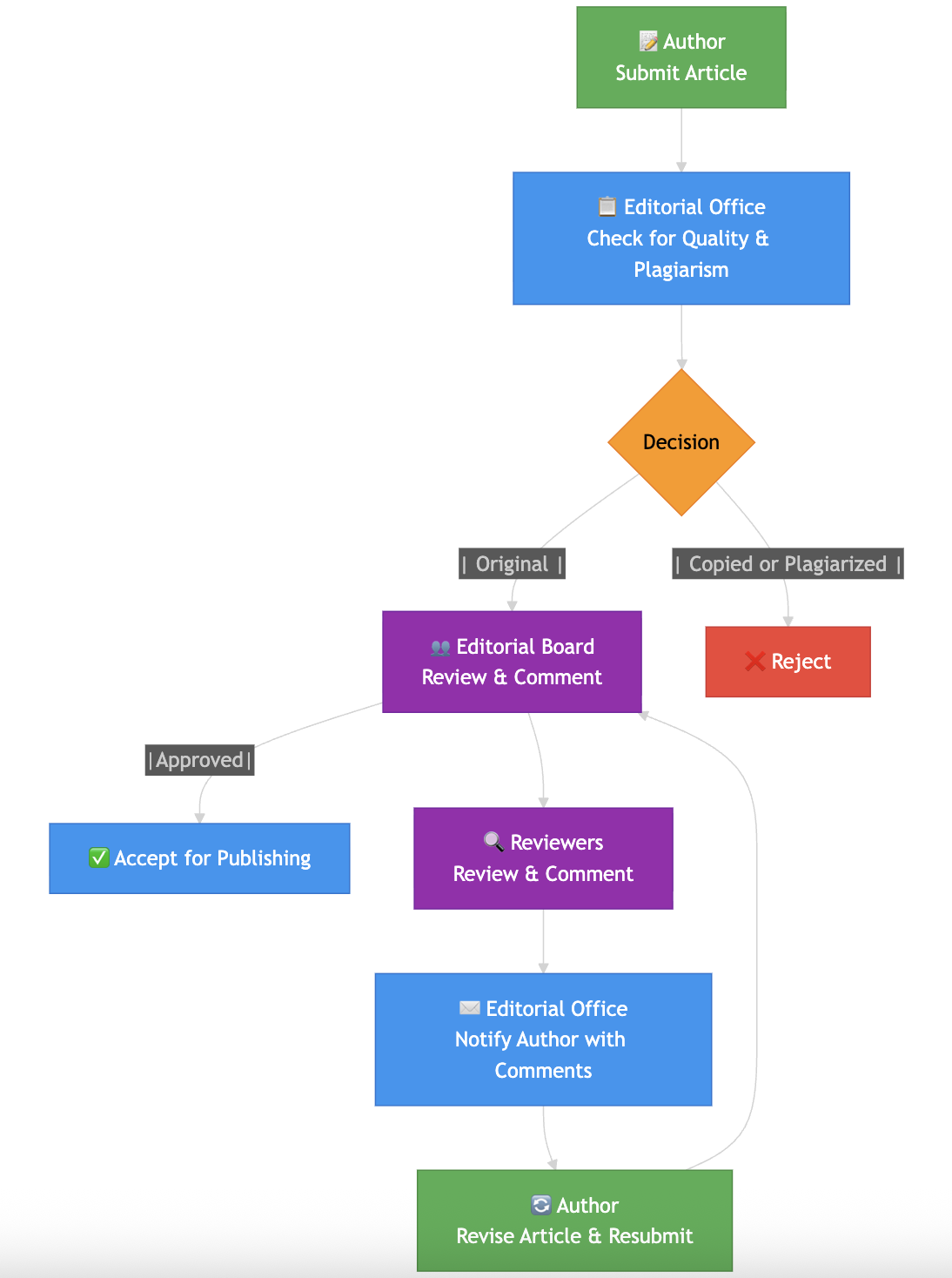
Article Processing Timeline
2–6 Days
Typical initial quality and plagiarism check
21–30 Days
Typical peer-review period
45–60 Days
Typical overall processing time
Processing times are indicative and may vary depending on manuscript
type, editorial assessment, reviewer availability, revision requirements,
ethical or technical checks, author response times, and production
requirements.
About the Journal
Overview
Advances in Plant Pathology Research is an international,
peer-reviewed, open-access journal dedicated to the publication of
scholarly research in plant pathology, plant health, plant-pathogen
interactions, and related agricultural and biological sciences. The
journal provides a platform for researchers, plant pathologists,
agricultural scientists, and other relevant professionals to communicate
scientific findings and developments in plant disease research.
The journal welcomes research covering a broad range of topics in plant
disease science, including pathogen biology, disease development and
spread, host-pathogen interactions, plant defense and resistance,
disease diagnostics, epidemiology, and integrated disease management.
Research involving genomic, biotechnological, molecular, and
computational approaches to plant pathology is also within the journal's
scope.
The journal encourages interdisciplinary research addressing plant
disease management in agricultural, horticultural, forestry, and natural
ecosystem settings. Topics may also include plant-microbe interactions,
plant microbiomes, postharvest pathology, disease monitoring,
phytosanitary science, environmental influences on plant diseases, and
research relevant to agricultural productivity and food security.
Advances in Plant Pathology Research welcomes original
research articles, review articles, short communications, case studies,
technical perspectives, and other scholarly contributions appropriate to
its scope. Manuscripts are considered in accordance with the journal's
editorial policies, ethical requirements, author guidelines, and
peer-review procedures.
The journal is committed to responsible scholarly communication,
research integrity, transparent editorial practices, accurate publication
metadata, and the responsible dissemination of research in plant
pathology and related agricultural and biological sciences.
Aim and Scope
Advances in Plant Pathology Research (APPR) publishes
original research articles, review articles, short communications, case
studies, technical perspectives, and other scholarly contributions
addressing plant diseases, plant health, and plant-pathogen interactions.
The journal welcomes submissions across a broad range of thematic areas,
including but not limited to:
Plant Pathogens & Fundamental Plant Pathology
- Identification, biology, and characterization of fungal, bacterial, viral, nematode, and phytoplasma pathogens
- Host–pathogen interactions, pathogenicity mechanisms, and infection processes
- Emerging and re-emerging plant diseases and their ecological impacts
Disease Diagnostics & Detection Technologies
- Molecular diagnostics, PCR-based assays, LAMP, and high-throughput sequencing for pathogen detection
- Serological methods, imaging technologies, and biosensor-based diagnostics
- Early detection systems, rapid field tests, and surveillance tools
Epidemiology & Disease Ecology
- Disease development, spread, and epidemiological modeling
- Environmental factors influencing disease outbreaks and pathogen survival
- Disease forecasting systems and climate-change-related pathogen dynamics
Plant Defense, Immunity & Resistance Breeding
- Plant immune responses, signaling pathways, and defense gene activation
- Quantitative and qualitative resistance mechanisms in crops
- Resistance breeding, gene pyramiding, and development of disease-resistant varieties
Integrated Disease Management (IDM)
- Cultural, biological, chemical, and ecological disease management strategies
- Biofungicides, biopesticides, microbial antagonists, and natural plant protectants
- Sustainable disease-control approaches and integrated crop protection systems
Molecular & Genomic Plant Pathology
- Genomics, transcriptomics, proteomics, metabolomics, and systems biology of plant-pathogen systems
- CRISPR and genome-editing applications for disease resistance
- Molecular markers and genetic mapping for pathogen identification and resistance traits
Soilborne Diseases & Microbiome Research
- Soil-plant-microbe interactions in disease development
- Rhizosphere microbiome dynamics and beneficial microbes in disease suppression
- Management of soilborne pathogens and root diseases
Postharvest Pathology & Food Security
- Postharvest diseases, storage pathogens, and spoilage mechanisms
- Postharvest protection strategies and shelf-life studies
- Impacts of plant diseases on food security, agricultural production, and trade
Emerging, Interdisciplinary, and Applied Plant Pathology
- Application of artificial intelligence, machine learning, remote sensing, and precision agriculture in disease monitoring
- Disease management in horticulture, forestry, and natural ecosystems
- Policy, phytosanitary regulations, risk assessment, and ethical considerations in plant health
The journal also welcomes interdisciplinary studies connecting plant
pathology with agricultural science, biotechnology, environmental
science, food systems, and other relevant fields.
Editorial and Peer-Review Policy
Advances in Plant Pathology Research
follows the editorial and peer-review procedures described in the
journal's policies and author guidelines. Manuscripts are assessed
for relevance to the journal's scope, originality, scientific merit,
methodological considerations, ethical compliance, and suitability
for publication.
Key features include:
-
Manuscripts are evaluated by appropriate reviewers and/or editors
with relevant subject expertise, according to the journal's
stated peer-review model.
-
The applicable peer-review model and reviewer confidentiality
arrangements are described in the journal's policies.
-
Editorial assessment considers scientific relevance, originality,
methodological quality, ethical compliance, and alignment with
the journal's scope.
-
Manuscripts undergo appropriate originality, plagiarism, and
research-integrity checks before or during the editorial process.
-
Final publication decisions are made by the responsible editor
in accordance with the journal's editorial policies and the
outcome of the applicable review process.
Publication Frequency & Format
The journal's publication frequency is
Annual (One issue per year).
Accepted articles are made available online in HTML and PDF formats
following completion of the applicable editorial and production processes,
supporting accessible and timely dissemination of published research.
Open Access Policy
Advances in Plant Pathology Research
operates under an open-access publishing model. Published content is
freely accessible to readers without subscription or paywall
restrictions, subject to the applicable journal policies and licensing
terms.
Copyright, licensing, and reuse rights are governed by the terms
specified for the journal and individual published content.
Indexing & Archiving
The Advances in Plant Pathology Research
seeks to make its published research discoverable through appropriate
scholarly indexing, abstracting, and discovery services. Inclusion in
any external indexing or abstracting service is subject to the
eligibility requirements, evaluation procedures, and acceptance
decisions of the respective service.
The journal is committed to maintaining accurate article metadata,
persistent identifiers, accessible article landing pages, and the
continued availability of published scholarly content.
Information about indexing, abstracting, discovery, and preservation
services is provided on a service-specific basis and is updated when
the relevant status has been established and verified.
Manuscript Submission
Authors are encouraged to submit their manuscripts through the journal's Online Submission
System (Submit Manuscript).
Manuscripts must adhere to the journal's author guidelines regarding structure, formatting,
referencing style, ethical approvals, and necessary disclosures (such as conflicts of interest
and funding).
Publication Ethics & Integrity
Advances in Plant Pathology Research follows internationally recognized standards for publication ethics and research integrity,
which include (but are not limited to):
- Make sure you have ethical approval.
- Ensure that informed consent is obtained where required and protect the confidentiality and privacy of participants and research subjects.
- Declare any conflicts of interest.
- Be transparent about data availability.
- Clarify authorship criteria and the roles of contributors.
- Conduct anti-plagiarism checks.
- Have a clear policy for retraction and correction.














 Abstract
 HTML
HTML
 PDF
PDF