In our rapidly changing and often stressful world, understanding human behavior, mental health, and psychiatric conditions is increasingly important. Human behavior and psychological well-being are influenced by complex interactions among biological, psychological, social, environmental, and cultural factors. The study of these interactions contributes to a better understanding of mental health, behavioral patterns, and psychiatric conditions across different stages of life.
The field of mental health and psychiatry encompasses a broad range of subjects, including cognition, emotion, anxiety, stress, attention, perception, intelligence, behavior, mood, and the neurological processes associated with mental and behavioral health. Research in these areas draws upon diverse theoretical and clinical perspectives and contributes to the understanding, assessment, prevention, and management of mental health and psychiatric conditions.
Through open-access publication and peer review, the journal aims to support the responsible dissemination of scholarly knowledge and facilitate the exchange of research findings among the academic, clinical, and scientific communities. We are committed to maintaining transparent editorial procedures, responsible research communication, research integrity, and accurate publication metadata.
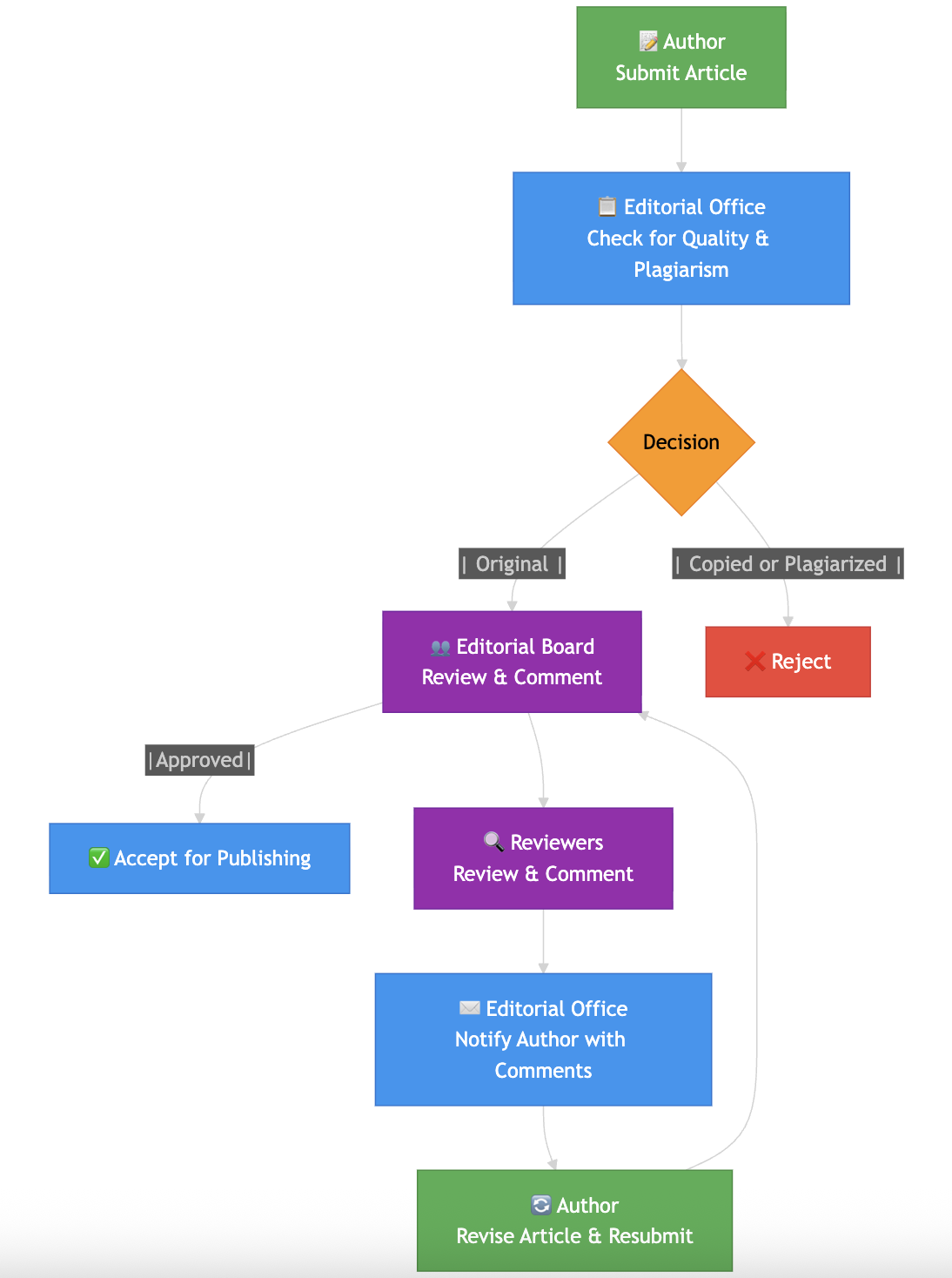
The journal uses an online submission system to facilitate manuscript submission, editorial assessment, peer review, communication, and tracking throughout the publication process. Manuscripts are evaluated in accordance with the journal's established editorial and peer-review procedures. Depending on the manuscript type and applicable journal policy, submissions may be reviewed by members of the editorial board and/or appropriate external reviewers.
Editorial decisions are based on the journal's scope, the quality and relevance of the submitted work, the outcome of peer review, ethical considerations, and the applicable editorial policies. Where the journal's peer-review policy requires multiple independent reviewers, the final decision is made by the responsible editor after considering the completed review reports and the overall suitability of the manuscript for publication.
The journal seeks to provide a transparent and professionally managed publication process while maintaining appropriate editorial and peer-review standards. Publication timelines may vary depending on the nature of the manuscript, reviewer availability, revision requirements, editorial decisions, and other factors.
The Journal of Mental Health and Psychiatry is a peer-reviewed, open-access journal dedicated to advancing research, clinical practice, and policy in the fields of mental health and psychiatry. The journal aims to provide a global platform for researchers, clinicians, educators, and policy makers to disseminate original findings, evidence-based practices, and innovations that enhance the understanding, prevention, and treatment of mental health conditions.
The scope of the journal encompasses a broad spectrum of topics including but not limited to:
Mental Health Research
Mental health research focuses on understanding the emotional, psychological, and social well-being of individuals and communities. It examines risk and protective factors, patterns of prevalence, and the causes of mental health conditions. The journal encourages evidence-based studies that deepen knowledge of mental health disorders. Research may explore personal experiences, social influences, or biological aspects. This field also promotes new approaches for prevention, early identification, and timely care. By supporting quality research, the journal aims to enhance mental health awareness and improve overall outcomes.
Clinical Psychiatry
As of right now, clinical psychiatry continues to focus on diagnosing and treating mental illnesses in all age demographics. The journal continues to receive submissions about different aspects of therapy and various clinical concerns. Some areas of research go into mood disorders, psychoses, anxiety, and personality disorders. There is a spectrum of interventions from medications, psychotherapy, and to a combination of the two. In clinical psychiatry, patient outcomes and personalized care are continuously improving.
Psychopharmacology
Psychopharmacology focuses on understanding how medications affect mood, behavior, and cognitive functions. The journal encourages submissions that explore drug efficacy, tolerance, side effects, and underlying mechanisms of action. This field plays a crucial role in advancing the development of safer and more effective psychiatric medications. Research may include clinical trial findings, pharmacological modeling, and studies on drug interactions. Through ongoing advancements, psychopharmacology continues to enhance treatment options and contribute to better patient outcomes.
Molecular Psychiatry
Molecular psychiatry explores the cellular, molecular, and genetic foundations of psychiatric disorders. It encompasses research in genomics, proteomics, neurobiology, and epigenetic mechanisms that influence mental health. Studies in this field aim to identify biomarkers that can predict disease risk, progression, and treatment response. The journal encourages interdisciplinary work that links molecular findings to clinical symptoms and patient outcomes. By advancing knowledge at the molecular level, this field plays a key role in driving precision medicine and more personalized mental health care.
Neurodevelopmental Disorders
Neurodevelopmental disorders are conditions that begin during early developmental stages, including autism spectrum disorder, ADHD, and related behavioral or learning challenges. Research in this area examines genetic influences, environmental exposures, and brain connectivity patterns that shape cognitive, emotional, and social functioning. Studies also focus on early detection, developmental pathways, and interventions that support long-term outcomes. This field plays a vital role in improving understanding and care for individuals across the developmental spectrum.
Cognitive Neuroscience
Cognitive neuroscience investigates how mental processes emerge from brain activity, focusing on functions such as memory, attention, perception, and decision-making. Research in this field helps uncover cognitive deficits associated with various psychiatric and neurological conditions. The journal welcomes studies employing techniques like fMRI, EEG, and neuropsychological assessments. Insights from this research contribute to improved diagnostic accuracy, a better understanding of brain-behavior relationships, and the development of more effective therapeutic strategies.
Psychiatric Genetics
Psychiatric genetics examines the role of heredity in the development of mental health conditions. This field focuses on identifying specific genetic variants, understanding gene-environment interactions, and deciphering the complex polygenic architecture of psychiatric disorders. Research aims to improve risk prediction, inform early intervention strategies, and guide personalized treatment approaches. By linking genetic insights to clinical outcomes, psychiatric genetics contributes to a deeper understanding of mental illnesses and the advancement of precision psychiatry.
Psychotherapy Research
Psychotherapy research examines the use of “talking cures,” including cognitive-behavioral therapy (CBT) and psychodynamic approaches, as treatments for mental health conditions. This field investigates mechanisms of change, the effectiveness of different therapies for specific disorders, and the role of the therapeutic alliance in outcomes. It also explores how psychotherapies can be adapted or modified to suit diverse cultural contexts. By understanding these factors, psychotherapy research contributes to improving treatment efficacy and tailoring interventions to individual patient needs.
Mental Health Stigma
Mental health stigma refers to the negative attitudes, beliefs, and discriminatory behaviors directed toward individuals with mental health conditions. Research in this area examines the societal, cultural, and structural factors that contribute to stigma, as well as its impact on help-seeking behaviors and treatment engagement. Studies also focus on designing and evaluating anti-stigma campaigns, educational programs, and policies aimed at reducing prejudice and promoting mental health awareness. Understanding stigma is essential for fostering more inclusive and supportive communities.
Global Mental Health
Global mental health focuses on addressing disparities in access to and quality of mental health care across the world. It emphasizes prevention, treatment, and rehabilitation, particularly in low-resource and underserved settings. Research in this field considers the cross-cultural validity of psychiatric diagnoses and promotes community-based intervention models. By highlighting equitable and culturally sensitive approaches, global mental health aims to improve outcomes and reduce the worldwide burden of mental disorders.
Forensic Psychiatry
Forensic psychiatry lies at the intersection of mental health and the law. Specialists evaluate competency, criminal responsibility, and risk, provide psychiatric care in secure or correctional settings, and offer expert testimony in legal proceedings. This field requires balancing clinical care with legal, ethical, and public safety considerations. Research and practice in forensic psychiatry contribute to informed legal decision-making and the development of effective treatment strategies for individuals within the justice system.
Psychotraumatology
Psychotraumatology examines the psychological and biological effects of extreme stress and trauma. This field focuses on conditions such as post-traumatic stress disorder (PTSD), exploring memory processes, neuroendocrine stress responses, and other physiological impacts of trauma. Research also emphasizes evidence-based interventions and therapeutic strategies to support trauma recovery. By integrating clinical, cognitive, and biological perspectives, psychotraumatology advances understanding and treatment of trauma-related mental health conditions.
Psychiatric Epidemiology
Psychiatric epidemiology examines the distribution and determinants of mental disorders within populations. It measures prevalence and incidence, identifies risk and protective factors, and evaluates the overall burden of mental illness. Research in this field informs public health planning, guides resource allocation, and supports the development of effective prevention and intervention strategies. By understanding patterns of mental health conditions, psychiatric epidemiology contributes to evidence-based policy and improved population-level outcomes.
Geriatric Psychiatry
Geriatric psychiatry focuses on the mental health of older adults, addressing conditions such as dementia, depression, and late-life psychosis. This field considers the complex interplay of aging, physical health, polypharmacy, and psychosocial transitions when diagnosing and treating patients. Research and clinical practice aim to improve quality of life, optimize cognitive and emotional functioning, and provide tailored interventions that meet the unique needs of the elderly population.
Child & Adolescent Psychiatry
Child and adolescent psychiatry is dedicated to the diagnosis and treatment of mental health disorders in young people. It emphasizes understanding developmental trajectories, implementing early interventions, and incorporating family systems into care. Treatments are tailored to the cognitive, emotional, and social stages of growth, ensuring age-appropriate and effective therapeutic approaches. This field aims to support healthy development and long-term mental well-being in children and adolescents.
Psychoanalysis
Psychodynamic psychiatry is both a theoretical framework and therapeutic approach that explores unconscious processes influencing behavior. It examines concepts such as defense mechanisms, transference, and internal conflicts, providing insight into personality development and psychopathology. This approach contributes to deep, long-term understanding of mental health and informs therapeutic strategies aimed at resolving underlying psychological issues.
Cognitive Psychology (Cognitivism)
Cognitive psychology explores mental processes such as perception, memory, attention, and problem-solving. In psychiatry, it helps explain dysfunctional thought patterns underlying various mental disorders and provides the theoretical foundation for cognitive-behavioral therapies (CBT). Research in this field informs assessment, treatment planning, and the development of interventions that target maladaptive cognition to improve mental health outcomes.
Cross-Cultural Psychiatry
Cultural psychiatry studies how cultural context influences the expression, understanding, and treatment of mental illnesses. It challenges the assumption that diagnostic categories are universally applicable and emphasizes the importance of culturally sensitive assessments. This field also guides the adaptation of therapeutic interventions to respect cultural values, beliefs, and practices, ultimately improving mental health care across diverse populations.
Genetics of Psychiatric Disorders
The genetics of psychiatric disorders investigates hereditary factors that contribute to mental illness. Twin, family, and genome-wide studies help identify risk genes and explore how gene–environment interactions influence vulnerability. Research in this field supports early detection in high-risk populations and informs the development of personalized treatment approaches. By linking genetic insights to clinical outcomes, it contributes to targeted therapies and precision psychiatry.
Mental Health Epidemiology
Mental health epidemiology examines the distribution, determinants, and risk factors of mental disorders within populations. Using population surveys, longitudinal studies, and statistical analyses, it identifies trends and patterns that reveal socioeconomic, cultural, and environmental influences. Findings from this research guide public health planning, resource allocation, and the development of community-based prevention strategies. By understanding population-level mental health, this field supports evidence-based interventions and policy-making to reduce the burden of mental illness.
Psychological Sciences & Human Behaviour
The journal welcomes research exploring emotion, cognition, perception, personality, and human behaviour. It invites both theoretical and empirical contributions from frameworks such as cognitivism, psychoanalysis, behaviourism, humanistic psychology, and contemporary psychological models. Studies applying experimental psychology, behavioural science, and cognitive theories to understand and improve mental health are particularly encouraged. This field bridges psychological theory with practical applications to enhance knowledge and interventions in mental health care.
The journal welcomes high-quality submissions in the form of original research articles, systematic reviews, case reports, clinical trials, short communications, and commentary pieces.
By fostering interdisciplinary dialogue and disseminating cutting-edge knowledge, the Journal of Mental Health and Psychiatry seeks to contribute meaningfully to the promotion of mental well-being and the reduction of psychiatric disease burden across diverse populations and settings.











 Abstract
 HTML
HTML
 PDF
PDF