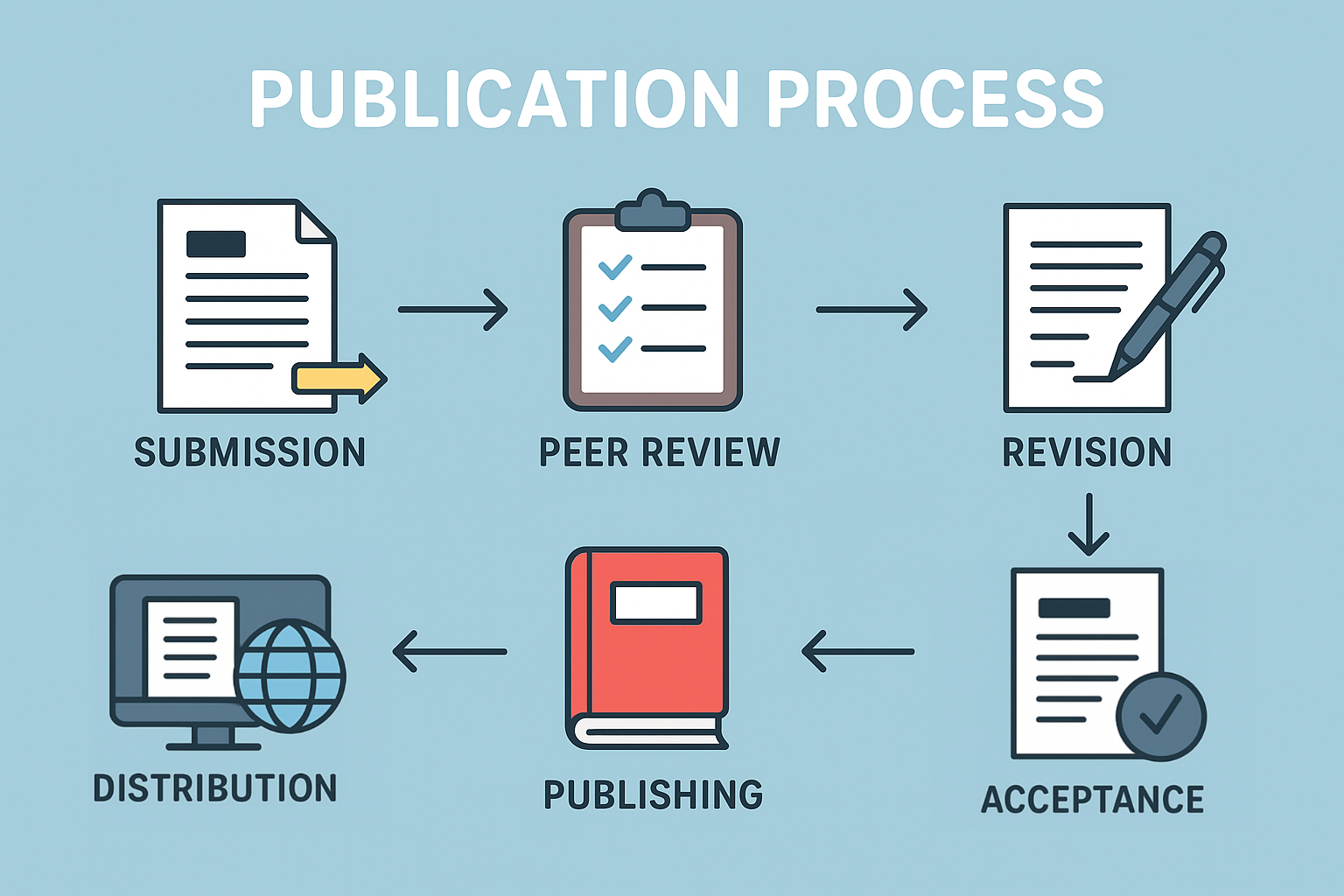
Responsibilities of Reviewers
Peer reviewers are essential custodians of academic quality, providing a
vital service to the journal and the wider scholarly community.
- Objective, Constructive, and Timely Evaluation: Reviews should be
conducted objectively, focusing on the scholarly merit, methodology,
validity, and significance of the work. Personal criticism of the
authors is inappropriate. Reviewers should provide constructive,
detailed, and evidence-based feedback to help authors improve their
manuscripts. They are also expected to submit their reviews within the
agreed-upon timeframe.
- Strict Confidentiality and Non-Usurpation: The manuscript under
review is a confidential document. Reviewers must not discuss the
unpublished work with others or use knowledge of the work for their
own research or personal advantage without the explicit, written
consent of the author.
- Proactive Declaration of Competing Interests: Reviewers must
decline to review a manuscript if they possess any competing interests
that could compromise their objectivity. This includes, but is not
limited to, recent (e.g., within the past 36 months) collaborative
projects, direct personal relationships, financial ties, or a strong
intellectual rivalry with the authors.
- Vigilance for Ethical and Scholarly Overlap: Reviewers should
alert the editor to any substantial similarity or overlap between the
manuscript under consideration and any other published paper of which
they are aware. They are also encouraged to identify cases where
relevant citations to the reviewer's own work have not been included
by the author, while avoiding any suggestion of self-promotion.
Elaborated Responsibilities of Editors
Editors act as stewards of the journal, responsible for maintaining its
academic standards and ensuring the integrity of the publication
process.
- Decisions Based on Scholarly Merit: Editorial decisions to accept
or reject a manuscript are made solely based on the work's
importance, originality, clarity, and relevance to the journal's
scope. The authors' race, gender, sexual orientation, religious
beliefs, ethnicity, citizenship, or political philosophy are not
considered.
- Robust and Impartial Peer Review: Editors are responsible for
securing a fair, unbiased, and timely peer-review process. This
involves selecting reviewers with appropriate expertise, ensuring that
reviews are thorough and constructive, and mediating interactions
between authors and reviewers.
- Proactive and Transparent Management of Ethical Concerns: Editors
have a duty to act upon any suspected ethical breaches, whether raised
by reviewers, readers, or identified internally. Such concerns are
investigated promptly and thoroughly, following prescribed COPE
flowcharts, with fairness and transparency to all parties involved.
- Recusal in Cases of Conflict of Interest: Editors and editorial
staff must recuse themselves from any involvement in the processing of
manuscripts where they have a competing interest, whether financial,
collaborative, institutional, or personal. In such cases, the
manuscript will be assigned to another editor.