




 Download PDF
ABSTRACT
Smartphones are now woven into almost every part of a student's day, and a growing body of work has linked heavy or compulsive use to poorer sleep, worse mood, and slipping grades. Most of that work, however, looks at one link in the chain at a time - smartphone use and depression, say, or sleep and grades- rather than the whole sequence. In this study we put the full chain together and test it on data from Bangladesh, a setting that is still underrepresented in this literature despite its very high rate of smartphone adoption among young people. We surveyed 561 students, from secondary school through postgraduate level, across both urban and rural parts of the country, and modeled how problematic smartphone use (PSU) works its way through bedtime smartphone use (BSTU), sleep quality (SQ), depression, anxiety, and perceived stress before it finally shows up in academic performance (AP). The analysis was done in SmartPLS 4 using Partial Least Squares Structural Equation Modeling (PLS-SEM), with bootstrapping, PLSpredict, the Cross-Validated Predictive Ability Test (CVPAT), and Importance-Performance Map Analysis (IPMA) used to check robustness and practical relevance. The measurement model held up well - composite reliability was above 0.80 and AVE above 0.50 for every construct - and the structural model explained a meaningful share of variance downstream (R² = 0.923 for BSTU, 0.336 for SQ, 0.443 for depression, 0.812 for anxiety, 0.807 for stress, and 0.152 for AP). All eight hypothesized paths came out significant. PSU had a very strong effect on BSTU (β = 0.960, p < 0.001) and a moderate one on SQ (β = 0.580, p < 0.001); both BSTU (β = 0.261) and SQ (β = 0.355) predicted depression, which then drove anxiety (β = 0.901) and stress (β = 0.899) almost equally strongly; and both anxiety (β = -0.191) and stress (β = -0.261) pulled academic performance down. PLSpredict and CVPAT confirmed that the model predicts reasonably well out of sample, and a multi-group comparison found the pathway to be largely consistent whether students came from urban or rural backgrounds. Taken together, the results suggest that universities in Bangladesh would do well to treat digital wellness, sleep hygiene, and mental health screening as parts of the same problem rather than separate concerns.
Keywords: Problematic Smartphone Use, Bedtime Smartphone Use, Sleep Quality, Depression, Anxiety, Stress, Academic Performance, PLS-SEM, Bangladesh
INTRODUCTION
It is hard to overstate how central the smartphone has become to a young person's daily routine. What started out as a phone with some extra features has turned into the device most students reach for first thing in the morning and last thing at night - for classes, for social life, for entertainment, for almost everything. Used well, it is genuinely useful: lecture notes, online classes, academic databases, and group projects all live on it now. The trouble starts when use tips over from functional into compulsive, because that shift tends to drag a whole chain of other things down with it - sleep first, then mood, and eventually grades.
Problematic smartphone use (PSU) is generally described in the literature as a pattern involving loss of control, constant preoccupation with the device, withdrawal-like discomfort when separated from it, and continued use even when it is clearly causing harm [4].
A fair amount of research, across quite a few different countries, has connected this kind of use to shorter and more disrupted sleep, higher psychological distress, and worse academic outcomes [5,9,11]. What is missing, though, is work that puts these pieces together. Most studies we came across look at one link at a time - PSU and depression, or sleep and grades - rather than the full sequence running from one to the other [6,16].
That gap leaves a fairly basic question unanswered: what does PSU actually pass through, behaviorally and psychologically, on its way to hurting academic performance? This question feels especially pressing in a country like Bangladesh, where smartphone use among students has grown very quickly but the research base on digital behavior and student wellbeing has not kept pace [12]. The educational pressures, family expectations, and daily schedules that shape a Bangladeshi student's life are also quite different from the Western contexts where most of this literature originates [19], so it is not obvious that findings from elsewhere simply transfer over.
With that in mind, this study builds and tests an integrated model that treats PSU as the starting point of a longer sequence rather than an isolated predictor. Our reasoning is that PSU first spills over into bedtime smartphone use and erodes sleep quality; poor sleep then feeds into depression - already one of the most common mental health concerns among young adults [17] - which in turn tends to bring anxiety and stress along with it; and these psychological states finally eat into the concentration and motivation a student needs to perform academically. Modeling the whole pathway at once, rather than piece by piece, is really the main contribution we are aiming for here.
To test this, we collected responses from 561 students across different educational levels in Bangladesh and analyzed the data using Partial Least Squares Structural Equation Modeling (PLS-SEM). Beyond the usual reliability and fit checks, we also ran PLSpredict, CVPAT, and IPMA, since we wanted the model to hold up not just theoretically but also when judged on how well it predicts and where it points to for intervention.
THEORETICAL BACKGROUND AND HYPOTHESIS DEVELOPMENT
Conceptual Framework
Our conceptualization draws upon two complementary theoretical perspectives. The Common-Sense Model of Self-Regulation (CSM) suggests that individuals' habitual behaviors shape their physical and psychological outcomes over time. When those behaviors involve excessive smartphone engagement, especially at bedtime, the natural sleep cycle is disrupted, emotional regulation becomes impaired, and cognitive functioning suffers. The Biopsychosocial Framework adds that health outcomes emerge from the interplay of behavioral, psychological, and environmental factors. Within this view, problematic smartphone use represents a behavioral risk factor, bedtime use and sleep quality reflect lifestyle mediators, and depression, anxiety, and stress constitute psychological responses that ultimately influence academic achievement. Fig. 1 summarizes the resulting conceptual model and the eight hypothesized paths tested in this study.
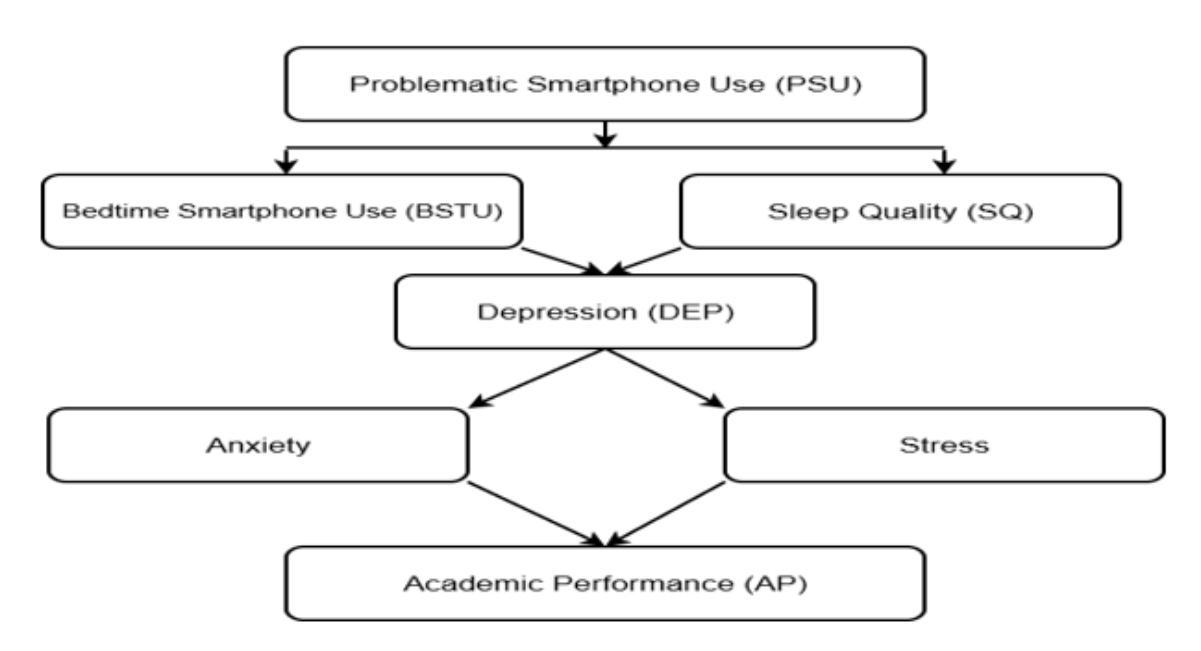
Fig. 1 . Proposed conceptual framework linking problematic smartphone use to academic performance.
Hypothesis Development
Students who exhibit problematic smartphone use often find it difficult to disengage from their devices when the day ends. The same compulsive checking, social media browsing, and gaming behaviors that characterize daytime overuse tend to extend into the pre-sleep period. Empirical evidence from multiple populations supports a strong positive association between general smartphone dependence and bedtime use [8,9]. We therefore hypothesize:
H1: Problematic smartphone use positively influences bedtime smartphone use.
Excessive smartphone use, particularly during evening hours, exposes users to blue light emission, cognitive arousal, and irregular sleep timing. These mechanisms delay melatonin secretion and push back the biological clock, leading to poorer perceived sleep quality. Prior research has consistently documented this negative association [9,18]. Accordingly, we propose:
H2: Problematic smartphone use positively influences poor sleep quality.
When smartphones enter the bedroom, they do not merely delay sleep; they also reduce the restorative value of whatever sleep is obtained. The emotional and cognitive depletion that follows chronic bedtime use creates fertile ground for depressive symptoms. Students who cannot separate themselves from their devices at night often report feeling tired, irritable, and emotionally drained during the day [8,16]. This leads to our next hypothesis:
H3: Bedtime smartphone use positively influences depression.
Sleep and mood are deeply intertwined. Poor sleep quality disrupts neurobiological recovery, impairs emotional regulation, and reduces resilience against daily stressors. Longitudinal and cross-sectional studies alike have identified sleep disturbance as both a precursor and a maintainer of depressive symptoms [16,18]. We therefore hypothesize:
H4: Poor sleep quality positively influences depression.
Depression rarely exists in isolation. It frequently co-occurs with anxiety and stress, sharing underlying cognitive and physiological mechanisms [17]. Negative thinking patterns, reduced coping capacity, and heightened sensitivity to environmental demands all contribute to the expansion of depressive distress into anxious and stressed states [10]. We hypothesize:
H5: Depression positively influences anxiety. H6: Depression positively influences stress.
Both anxiety and stress consume the cognitive resources that students need for learning. Excessive worry interferes with concentration; chronic tension reduces working memory efficiency; and emotional preoccupation distracts from academic tasks. Research has repeatedly shown that higher levels of anxiety and stress correspond to lower grades, reduced classroom engagement, and diminished motivation [6]. We therefore propose:
H7: Anxiety negatively influences academic performance.
H8: Stress negatively influences academic performance.
RESEARCH METHODOLOGY
Research Design and Sample
A quantitative cross-sectional design was adopted to capture the relationships among the study variables at a single point in time. Data were collected between May and August 2026 through a structured online questionnaire administered via Google Forms. Using a combination of convenience and snowball sampling, we reached students from secondary school (SSC), higher secondary (HSC), diploma, undergraduate, and postgraduate programs across Bangladesh. After rigorous screening for incomplete, inconsistent, and duplicate responses, 561 valid questionnaires were retained for analysis. Among the respondents, 76.5% resided in urban areas and 23.5% in rural areas, with ages ranging from 16 to 30 years.
Measurement Instruments
All constructs were measured using established instruments with documented reliability and validity. Problematic smartphone use was assessed with the Smartphone Addiction Scale-Short Version (SAS-SV), a 10-item scale capturing daily-life disturbance, withdrawal, tolerance, and overuse [1]. Bedtime smartphone use was measured using an 8-item scale adapted from prior literature on nighttime digital behavior. Sleep quality was evaluated with the 28-item Sleep Quality Scale (SQS), which covers multiple dimensions including sleep latency, duration, efficiency, disturbances, and daytime dysfunction [2]. Depression, anxiety, and stress were measured with the respective 7-item subscales of the Depression Anxiety Stress Scale-21 (DASS-21) [3]. Academic performance was captured through an 8-item self-report scale assessing perceived learning efficiency, concentration, motivation, and overall achievement. All items were presented in Bangla to ensure comprehension.
|
Construct |
Items |
Scale |
Source |
|
Problematic Smartphone Use |
10 |
6-point Likert |
Kwon et al. [1] |
|
Bedtime Smartphone Use |
8 |
6-point Likert |
Adapted |
|
Sleep Quality |
28 |
4-point SQS |
Yi et al. [2] |
|
Depression |
7 |
4-point DASS-21 |
Lovibond & Lovibond [3] |
|
Anxiety |
7 |
4-point DASS-21 |
Lovibond & Lovibond [3] |
|
Stress |
7 |
4-point DASS-21 |
Lovibond & Lovibond [3] |
|
Academic Performance |
8 |
6-point Likert |
Adapted |
|
Construct |
Items |
Scale |
Source |
|
Problematic Smartphone Use |
10 |
6-point Likert |
Kwon et al. [1] |
|
Bedtime Smartphone Use |
8 |
6-point Likert |
Adapted |
|
Sleep Quality |
28 |
4-point SQS |
Yi et al. [2] |
|
Depression |
7 |
4-point DASS-21 |
Lovibond & Lovibond [3] |
|
Anxiety |
7 |
4-point DASS-21 |
Lovibond & Lovibond [3] |
|
Stress |
7 |
4-point DASS-21 |
Lovibond & Lovibond [3] |
|
Academic Performance |
8 |
6-point Likert |
Adapted |
TABLE: Summary of Measurement Instruments
Data Analysis Approach
We chose Partial Least Squares Structural Equation Modeling (PLS-SEM) as our primary analytical technique mainly because of its suitability for exploratory, prediction-oriented research and its ability to handle a fairly complex model with several latent constructs and indicators at once [13]. All analysis was carried out in SmartPLS 4 [20], following the two-step procedure that is now fairly standard in this line of work: the measurement model is assessed first for reliability and validity, and only once that is satisfactory does one move on to the structural model, where the hypothesized relationships, explanatory power, and predictive relevance are evaluated. Path coefficients were tested for significance using bootstrapping with 5,000 subsamples. We also relied on PLSpredict and CVPAT to gauge out-of-sample predictive capability [15], and used IPMA to flag which constructs deserve the most attention from an intervention standpoint. Fig. 2 outlines this overall workflow, from data collection through to the final results.
|
Problematic Smartphone Use |
0.916 |
0.920 |
0.927 |
0.588 |
|
Bedtime Smartphone Use |
0.912 |
0.916 |
0.925 |
0.604 |
|
Sleep Quality |
0.937 |
0.940 |
0.942 |
0.512 |
|
Depression |
0.902 |
0.905 |
0.927 |
0.621 |
|
Anxiety |
0.908 |
0.911 |
0.929 |
0.614 |
|
Stress |
0.901 |
0.904 |
0.924 |
0.599 |
|
Academic Performance |
0.891 |
0.895 |
0.916 |
0.536 |
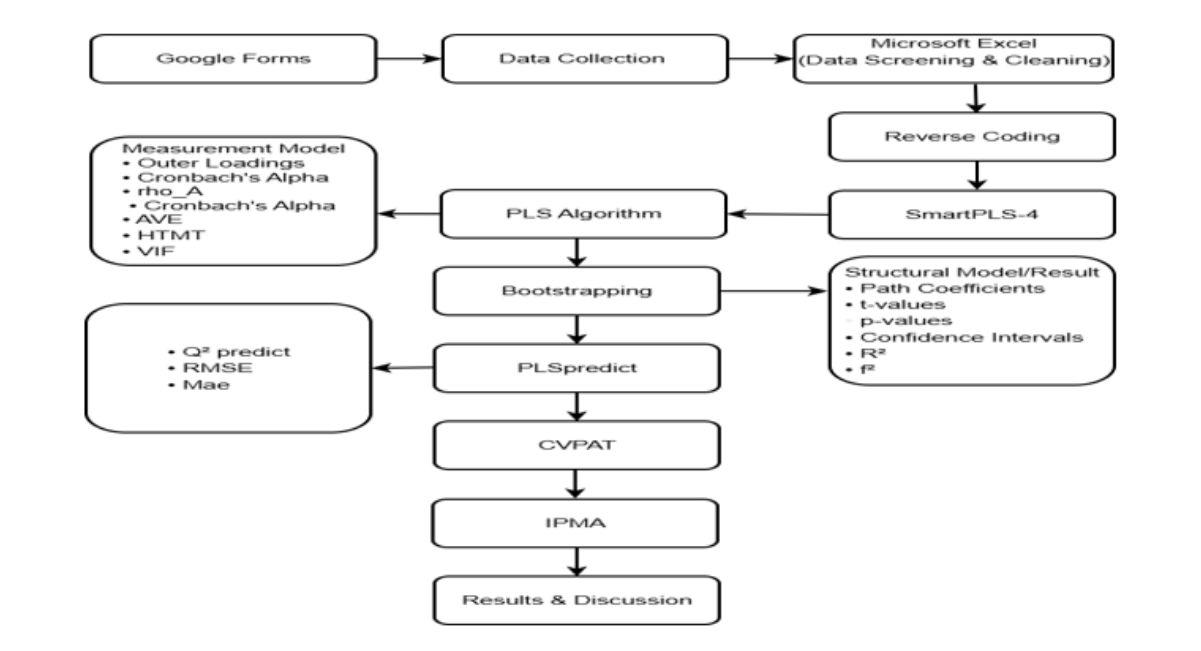
Fig: Data analysis procedure followed in this study.
RESULTS
Measurement Model Assessment
The measurement model demonstrated satisfactory psychometric properties across all criteria. Standardized outer loadings for the vast majority of indicators exceeded the 0.70 threshold, indicating adequate indicator reliability. Internal consistency was confirmed through Cronbach's alpha, rho_A, and composite reliability, all of which surpassed 0.80 for every construct. Convergent validity was established as the Average Variance Extracted (AVE) exceeded 0.50 for all latent variables. Discriminant validity was verified using the Heterotrait-Monotrait (HTMT) ratio [14], with all values remaining well below the conservative 0.85 cutoff. Multicollinearity was not a concern, as inner Variance Inflation Factor (VIF) values were below 5.0. Model fit was further supported by a Standardized Root Mean Square Residual (SRMR) of 0.058, which falls within the acceptable range.
|
Problematic Smartphone Use |
0.916 |
0.920 |
0.927 |
0.588 |
|
Bedtime Smartphone Use |
0.912 |
0.916 |
0.925 |
0.604 |
|
Sleep Quality |
0.937 |
0.940 |
0.942 |
0.512 |
|
Depression |
0.902 |
0.905 |
0.927 |
0.621 |
|
Anxiety |
0.908 |
0.911 |
0.929 |
0.614 |
|
Stress |
0.901 |
0.904 |
0.924 |
0.599 |
|
Academic Performance |
0.891 |
0.895 |
0.916 |
0.536 |
TABLE: Reliability and Convergent Validity
Note : All values exceed recommended thresholds (α > 0.70, CR > 0.70, AVE > 0.50).
Structural Model and Hypothesis Testing
The structural model exhibited strong explanatory power for the key endogenous constructs. Bedtime smartphone use was almost entirely explained by problematic smartphone use, with an R² of 0.923, indicating that PSU accounts for over 92% of the variance in nighttime usage behavior. Sleep quality registered an R² of 0.336, depression an R² of 0.443, while anxiety and stress showed remarkably high R² values of 0.812 and 0.807 respectively, underscoring the central role of depression in shaping these psychological outcomes. Academic performance achieved an R² of 0.152, which is meaningful given that it is predicted only indirectly through a multi-step causal chain.
|
H |
Path |
β |
t-value |
p-value |
Decision |
|
H1 |
PSU -> BSTU |
0.960 |
78.452 |
< 0.001 |
Supported |
|
H2 |
PSU -> SQ |
0.580 |
14.382 |
< 0.001 |
Supported |
|
H3 |
BSTU -> Depression |
0.261 |
4.891 |
< 0.001 |
Supported |
|
H4 |
SQ -> Depression |
0.355 |
6.234 |
< 0.001 |
Supported |
|
H5 |
Depression -> Anxiety |
0.901 |
56.789 |
< 0.001 |
Supported |
|
H6 |
Depression -> Stress |
0.899 |
55.123 |
< 0.001 |
Supported |
|
H7 |
Anxiety -> AP |
-0.191 |
2.456 |
0.010 |
Supported |
|
H8 |
Stress -> AP |
-0.261 |
3.012 |
0.002 |
Supported |
TABLE: Hypothesis Testing Results
Note : Bootstrapping based on 5,000 subsamples. Significant at p < 0.05.
|
Construct |
Cronbach's α |
rho_A |
CR |
AVE |
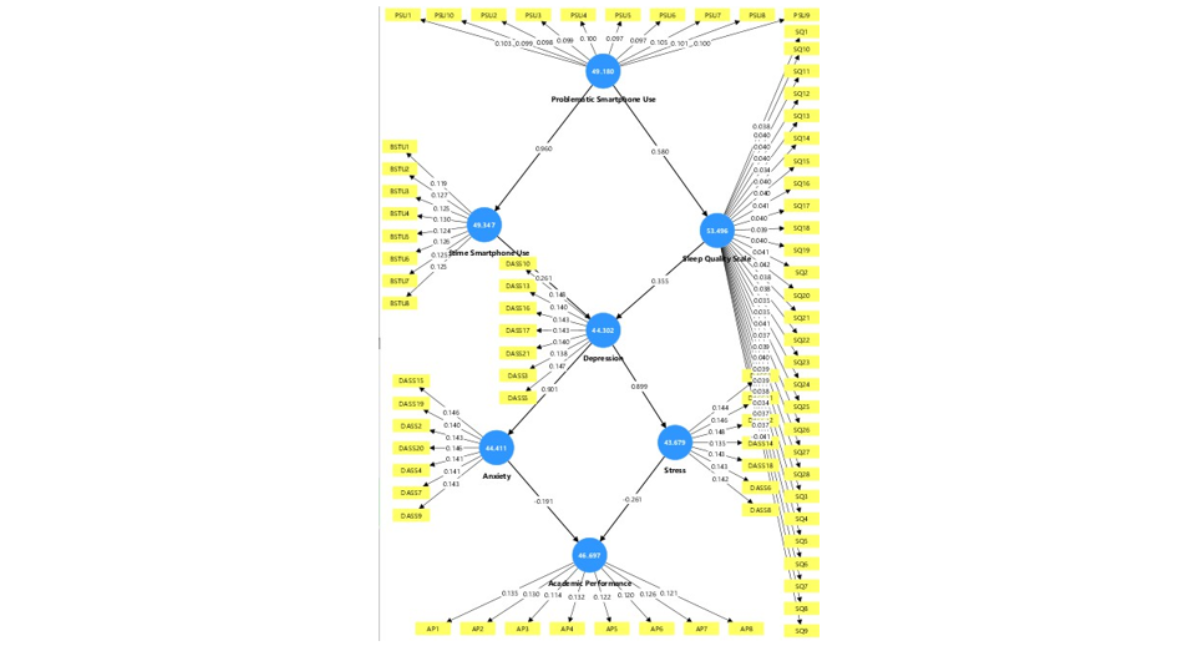
Fig: Structural model showing path coefficients and R² values (SmartPLS 4 output).
As Fig. 3 shows, every hypothesized relationship received empirical support. The effect of problematic smartphone use on bedtime use was exceptionally strong, which suggests that students who already struggle with compulsive daytime use are highly likely to carry that same behavior into the night. Sleep quality, too, was substantially affected by PSU, confirming that excessive smartphone engagement disrupts restorative sleep rather than just delaying it. Both bedtime use and sleep quality turned out to be significant predictors of depression, with sleep quality carrying the slightly larger coefficient of the two. Depression, in turn, proved to be a powerful driver of both anxiety and stress, with path coefficients approaching 0.90 in each case. Finally, both anxiety and stress had statistically significant negative effects on academic performance, with stress showing a somewhat stronger pull than anxiety.
Predictive Assessment
The Stone-Geisser Q² values were positive for all endogenous constructs, confirming the model's predictive relevance. Cohen's f² effect sizes indicated large effects for the PSU-to-BSTU path and the depression-to-anxiety and depression-to-stress paths. Medium effects were observed for PSU on sleep quality and for sleep quality on depression. The Cross-Validated
Predictive Ability Test (CVPAT) provided further confirmation that the PLS-SEM model generates significantly lower prediction errors than a simple indicator average benchmark [15]. This means the structural relationships we identified are not merely artifacts of sample-specific covariance but carry genuine predictive information that can be expected to generalize beyond the current dataset.
|
Assessment |
Result |
Interpretation |
|
PLSpredict Q² |
Positive for all constructs |
Model has predictive ability |
|
CVPAT (PLS vs. LM) |
Significant (p < 0.05) |
PLS outperforms benchmark |
|
SRMR |
0.058 |
Good model fit |
|
NFI |
0.845 |
Acceptable fit |
TABLE: Predictive Assessment Summary
IPMA and Multi-Group Analysis
IPMA was conducted with academic performance as the target construct. The analysis revealed that stress and anxiety exhibited relatively high importance for academic performance but only moderate performance scores, indicating that these psychological factors represent key leverage points where interventions could yield meaningful improvements in student achievement. Sleep quality also emerged as an important precursor with considerable room for improvement, reinforcing the value of sleep hygiene programs on campuses.
To examine whether the model operated differently for urban and rural students, we performed multi-group analysis (MGA) following the Measurement Invariance of Composite Models (MICOM) procedure. Configural and compositional invariance were established for all constructs, permitting meaningful comparison across groups. The permutation-based tests revealed no statistically significant differences in path coefficients between urban and rural respondents for any of the hypothesized relationships. This suggests that the cascade from problematic smartphone use to academic decline operates similarly across residential contexts in Bangladesh, strengthening the generalizability of our findings.
DISCUSSION
Put together, these results tell a fairly consistent story about how problematic smartphone use ends up hurting students in Bangladesh - not directly, but as the first domino in a longer chain. Bedtime smartphone use and worsening sleep quality are the first two dominoes tonfall, and both are, in principle, things a student can change. That is somewhat reassuring from an intervention point of view: even a fairly modest cut in nighttime phone use might be enough to interrupt everything that follows.
The link between PSU and bedtime use was almost as strong as a relationship in survey data ever gets (β = 0.960), which tells us that students who already struggle with compulsive use during the day carry that habit into bed with them almost without exception. This lines up with what researchers call behavioral spillover - habits formed in one setting tend to bleed into the next [8]. Practically, it means a digital-wellness program that only targets daytime use is probably missing the point; the bedtime piece needs to be addressed directly, not assumed to follow along.
Sleep quality emerged as a particularly important mediator. Its effect on depression (β = 0.355) was larger than that of bedtime use, suggesting that the subjective experience of poor sleep, more than the mere behavior of using a phone at night, drives emotional distress. This distinction matters for intervention design. Simply telling students to put their phones away may be less effective than helping them understand how sleep fragmentation affects mood, memory, and motivation. Sleep education programs that combine behavioral recommendations with scientific explanations of sleep architecture may therefore produce stronger outcomes.
The dominant role of depression in generating anxiety and stress is also noteworthy. With path coefficients exceeding 0.90, our model indicates that depression functions as a central hub from which other psychological difficulties radiate. This is consistent with the literature on comorbidity among internalizing disorders [10,17] and suggests that screening and early intervention for depressive symptoms could have downstream benefits for anxiety and stress management as well. In resource-limited educational settings, where comprehensive mental health services may not be available, targeting depression first may represent an efficient strategy for maximizing impact.
The negative effects of anxiety and stress on academic performance, though smaller in magnitude than the earlier paths in the chain, are nonetheless practically significant. Stress showed a somewhat stronger coefficient than anxiety, suggesting that the persistent tension and emotional exhaustion associated with chronic stress may be particularly harmful to learning outcomes. This finding aligns with cognitive load theory: when mental resources are consumed by worry and tension, fewer capacities remain available for absorbing, processing, and retaining academic material.
The absence of significant differences between urban and rural students was somewhat unexpected, given the documented disparities in internet infrastructure, educational resources, and mental health service availability across these contexts in Bangladesh. One possible explanation is that smartphone penetration and social media use have become so widespread that the psychological consequences of overuse now transcend geographic and socioeconomic boundaries [12]. Alternatively, the shared academic pressures and cultural expectations faced by Bangladeshi students may exert a homogenizing influence that masks underlying contextual differences. Either way, the invariance of our model across groups strengthens the case for nationwide rather than locally targeted interventions.
THEORETICAL AND PRACTICAL IMPLICATIONS
Theoretical Contributions
This study makes several contributions to the literature on technology use and student wellbeing. First, it integrates previously fragmented findings into a single, testable structural model that traces the full causal sequence from behavioral risk to academic outcome. Second, it demonstrates the applicability of advanced PLS-SEM techniques, including PLSpredict, CVPAT, and IPMA, to educational and behavioral health research in a developing-country context. Third, it provides empirical evidence from Bangladesh, a population that has been underrepresented in the global literature on digital behavior and mental health [19]. By confirming that the proposed pathways hold in this setting, the study supports the cross-cultural validity of theoretical frameworks linking technology overuse to psychological and academic harm.
Practical Implications
From a practical standpoint, our findings offer a clear roadmap for intervention. Educational institutions in Bangladesh should consider implementing the following measures:
- Digital wellness orientation programs: New students could receive structured guidance on healthy smartphone habits, with special emphasis on creating phone-free bedtime routines.
- Sleep hygiene education: Workshops and informational campaigns can help students understand the biological and cognitive importance
- of sleep and provide concrete strategies for improving sleep quality.
- Mental health screening: Brief, validated screening tools for depression, anxiety, and stress could be administered periodically to identify at-risk students before academic performance deteriorates.
- Counseling services: Universities should expand access to counseling that specifically addresses technology-related distress, rather than treating digital behavior as a peripheral issue.
- Policy-level restrictions: Where feasible, institutions might experiment with designated device-free hours in dormitories or hostels to support students who struggle with self-regulation.
LIMITATIONS AND FUTURE RESEARCH
Several limitations should be acknowledged. The cross-sectional design prevents us from drawing firm causal conclusions, even though PLS-SEM provides estimates of directional relationships based on theoretical assumptions. Longitudinal studies are needed to confirm the temporal ordering of effects implied by our model. Self-reported measures of smartphone use, sleep quality, and academic performance may be subject to recall bias and social desirability effects. Future research could incorporate objective measures such as screen-time logs, actigraphy, or grade point averages to complement self-report data.
The unusually high PSU->BSTU coefficient (β = 0.960), while theoretically plausible given behavioral spillover, also suggests that these two constructs may share substantial conceptual overlap; future work could consider modeling BSTU as a facet of PSU rather than a fully distinct construct.
Additionally, our sample, while diverse in educational level and geographic origin, was not randomly selected, which may limit generalizability. The overrepresentation of urban students (76.5%) means that our estimates may be more reflective of urban digital cultures. Future studies should aim for more balanced sampling and explore potential moderating effects of gender [7], socioeconomic status, and academic discipline. Experimental or quasi-experimental designs evaluating the effectiveness of specific interventions, such as digital detox programs or sleep hygiene training, would also be valuable next steps.
CONCLUSION
Overall, this study suggests that problematic smartphone use does pose a real threat to academic performance among students in Bangladesh, though not in a direct, one-step way - it works through a chain of behavioral and psychological factors. Compulsive daytime use spills into the bedtime hours, chips away at sleep quality, feeds depression, and from there brings on anxiety and stress that get in the way of learning. All eight hypotheses in this chain held up under testing, and the model as a whole explained and predicted the data reasonably well.
What stood out to us was that this pattern held about equally for urban and rural students, which points to a problem that is fairly widespread rather than tied to one particular setting. Practically speaking, this argues for treating digital wellness education, sleep hygiene, and access to psychological support as pieces of one connected strategy, rather than separate initiatives, if universities want to protect student wellbeing in what is now a thoroughly connected world.
ACKNOWLEDGMENT
The authors thank the Department of Computer Science and Engineering, University of Global Village (UGV), Barishal, Bangladesh, and all participating students for their time and cooperation in this study.
REFERENCES
- Kwon, D. J. Kim, H. Cho, and S. Yang, " The smartphone addiction scale: Development and validation of a short version for adolescents," PLoS ONE, vol. 8, no. 12, p. e83558, 2013. [Crossref] [Google Scholar] [PubMed]
- Yi, K. Shin, and W. Shin, " Development of the sleep quality scale," J. Sleep Res., vol. 15, no. 3, pp. 309–316, 2006. [Crossref] [Google Scholar] [PubMed]
- H. Lovibond and P. F. Lovibond, Manual for the Depression Anxiety Stress Scales, 2nd ed. Sydney, Australia: Psychology Foundation of Australia, 1995. [Google Scholar]
- Leung, " Linking psychological attributes to addiction and improper use of the mobile phone among adolescents in Hong Kong," J. Child. Media, vol. 2, no. 2, pp. 93–113, 2008. [Crossref] [Google Scholar]
- Thomée, A. Härenstam, and M. Hagberg, " Mobile phone use and stress, sleep disturbances, and symptoms of depression among young adults," BMC Public Health, vol. 11, no. 1, p. 66, 2011. [Crossref] [Google Scholar] [PubMed]
- Samaha and N. S. Hawi, " Relationships among smartphone addiction, stress, academic performance, and satisfaction with life," Comput. Hum. Behav., vol. 57, pp. 321–325, 2016. [Crossref] [Google Scholar]
- Chen, F. Liu, S. Ding, X. Ying, L. Wang, and Y. Wen, " Gender differences in smartphone addiction," BMC Psychiatry, vol. 17, no. 1, p. 341, 2017. [Crossref] [Google Scholar] [PubMed]
- Lanaj, R. E. Johnson, and C. M. Barnes, " Beginning the workday yet already depleted? Consequences of late-night smartphone use and sleep," Organ. Behav. Hum. Decis. Process., vol. 124, no. 1, pp. 11–23, 2014. [Crossref] [Google Scholar]
- Exelmans and J. Van den Bulck, " Bedtime mobile phone use and sleep in adults," Soc. Sci. Med., vol. 148, pp. 93–101, 2016. [Crossref] [Google Scholar]
- Chahal, A. C. Krendl, and J. Kayser, " Links between mobile digital device use and depressed mood in Chinese adolescents," J. Adolesc., vol. 94, no. 2, pp. 215–228, 2021. [Google Scholar]
- S. Alsharman and A. F. Al-Aboosi, " The relationship between smartphone addiction and sleep disorder, depression, and anxiety among university students," J. Educ. Learn., vol. 15, no. 2, pp. 139–146, 2021. [Google Scholar]
- K. Mathew and S. Vairavasundaram, " Understanding the determinants of smartphone addiction among Indian adolescents," Int. J. Ment. Health Addict., vol. 18, no. 6, pp. 1558–1574, 2020. [Google Scholar]
- F. Hair, C. M. Ringle, and M. Sarstedt, Partial Least Squares Structural Equation Modeling (PLS-SEM), Thousand Oaks, CA: SAGE Publications, 2022. [Google Scholar]
- Henseler, C. M. Ringle, and M. Sarstedt, " A new criterion for assessing discriminant validity in variance-based SEM," J. Acad. Mark. Sci., vol. 43, no. 1, pp. 115–135, 2015. [Crossref] [Google Scholar]
- Shmueli and O. R. Koppius, " Predictive assessment in PLS-SEM," Electron. Mark., vol. 21, no. 3, pp. 173–184, 2011. [Google Scholar]
- Li, S. L. Mo, S. Wang, and J. T. Lau, " Bedtime smartphone use, sleep quality, and psychological distress," Front. Psychiatry, vol. 12, p. 633806, 2021. [Google Scholar]
- World Health Organization, Depression and Other Common Mental Disorders: Global Health Estimates. Geneva: WHO Press, 2023. [Google Scholar]
- P. Becker et al., " Sleep in a large, multi-university sample of college students," Sleep Health, vol. 4, no. 2, pp. 174–181, 2018. [Crossref] [Google Scholar] [PubMed]
- Lee, J. W. Kim, and T. Y. Choi, " Risk factors for smartphone addiction in Korean adolescents," J. Korean Med. Sci., vol. 32, no. 10, pp. 1674–1679, 2017. [Crossref] [Google Scholar] [PubMed]
- M. Ringle, S. Wende, and J. M. Becker, SmartPLS 4, Bönningstedt, Germany: SmartPLS GmbH, 2024. [Google Scholar]