The journal considers research addressing the continuum from clinical
assessment and diagnosis through treatment, rehabilitation, recovery,
disability management, and long-term care. Its scope includes clinical
medicine, therapeutic interventions, rehabilitation strategies,
functional assessment, recovery processes, assistive technologies,
healthcare delivery, and related interdisciplinary areas.
The journal welcomes original research articles, clinical studies,
systematic reviews, review articles, case reports and studies,
methodological contributions, and other scholarly submissions
appropriate to its scope. Research connecting hospital-based medicine
with rehabilitation, post-treatment care, disability management, and
functional restoration is also within the journal's scope.
Manuscripts are considered in accordance with the journal's scope,
editorial policies, ethical requirements, author guidelines, and
peer-review procedures. The journal is committed to responsible
scholarly communication, research integrity, transparent editorial
practices, accurate publication metadata, and responsible dissemination
of research in medicine and rehabilitation sciences.
Advances in Medicine and Rehabilitation Sciences is an interdisciplinary journal dedicated to research at the interface of clinical medicine, rehabilitation sciences, functional recovery, translational research, and evidence-based healthcare.
The journal publishes original research articles, review articles, clinical studies, case reports, methodological studies, technical communications, and interdisciplinary research that contribute to the prevention or management of disability, improvement of functional outcomes, rehabilitation, recovery, and long-term patient care.
Clinical and biomedical studies are considered when they demonstrate a clear relevance to rehabilitation, functional recovery, disability management, patient outcomes, or translational rehabilitation practice.
PHYSICAL AND REHABILITATION MEDICINE
This section covers physical and rehabilitation medicine, physiotherapy, exercise therapy, movement sciences, functional assessment, mobility, disability management, recovery pathways, and multidisciplinary rehabilitation strategies.
NEUROLOGICAL AND MUSCULOSKELETAL REHABILITATION
The journal welcomes research related to stroke rehabilitation, brain and spinal cord injury, neurodegenerative disorders, neurological rehabilitation, orthopedic conditions, musculoskeletal disorders, trauma recovery, sports injuries, pain management, and post-surgical rehabilitation.
CARDIOPULMONARY AND GERIATRIC REHABILITATION
This area includes cardiac rehabilitation, pulmonary rehabilitation, post-critical-care recovery, rehabilitation following major medical or surgical interventions, geriatric rehabilitation, frailty, mobility impairment, healthy aging, and functional recovery in older adults.
REHABILITATION TECHNOLOGY, DIGITAL HEALTH, AND ARTIFICIAL INTELLIGENCE
This section includes assistive technologies, prosthetics and orthotics, rehabilitation robotics, wearable technologies, tele-rehabilitation, digital rehabilitation platforms, remote patient monitoring, virtual and augmented rehabilitation environments, and artificial intelligence applications relevant to rehabilitation and functional healthcare.
TRANSLATIONAL AND INTEGRATED REHABILITATION RESEARCH
The journal encourages research connecting laboratory discoveries, clinical medicine, rehabilitation practice, and healthcare delivery.
Topics may include regenerative approaches, biomarker research, imaging, biomedical engineering, clinical diagnostics, and comparative or translational medical research when these have a clear relationship to rehabilitation, functional recovery, or patient outcomes.
PSYCHOSOCIAL AND COGNITIVE REHABILITATION
Research addressing psychological adjustment, cognitive rehabilitation, behavioral interventions, psychosocial recovery, quality of life, and mental-health factors associated with disability, chronic disease, or rehabilitation is also within the journal's scope.
COMMUNITY AND LONG-TERM REHABILITATION
The journal welcomes research on community-based rehabilitation, disability prevention, rehabilitation service delivery, health-system approaches to rehabilitation, continuity of care, long-term functional outcomes, and population-level interventions directly related to rehabilitation and disability.
INTERDISCIPLINARY REHABILITATION SCIENCES
Interdisciplinary research involving medicine, rehabilitation sciences, physiotherapy, occupational therapy, nursing, biomedical engineering, psychology, public health, and healthcare technology is welcomed when rehabilitation, functional recovery, disability, or patient-centered outcomes represent a substantive component of the study.
Advances in Medicine and Rehabilitation Sciences aims to advance evidence that improves functional recovery, rehabilitation practice, disability management, quality of life, and continuity of care across different patient populations and healthcare settings.
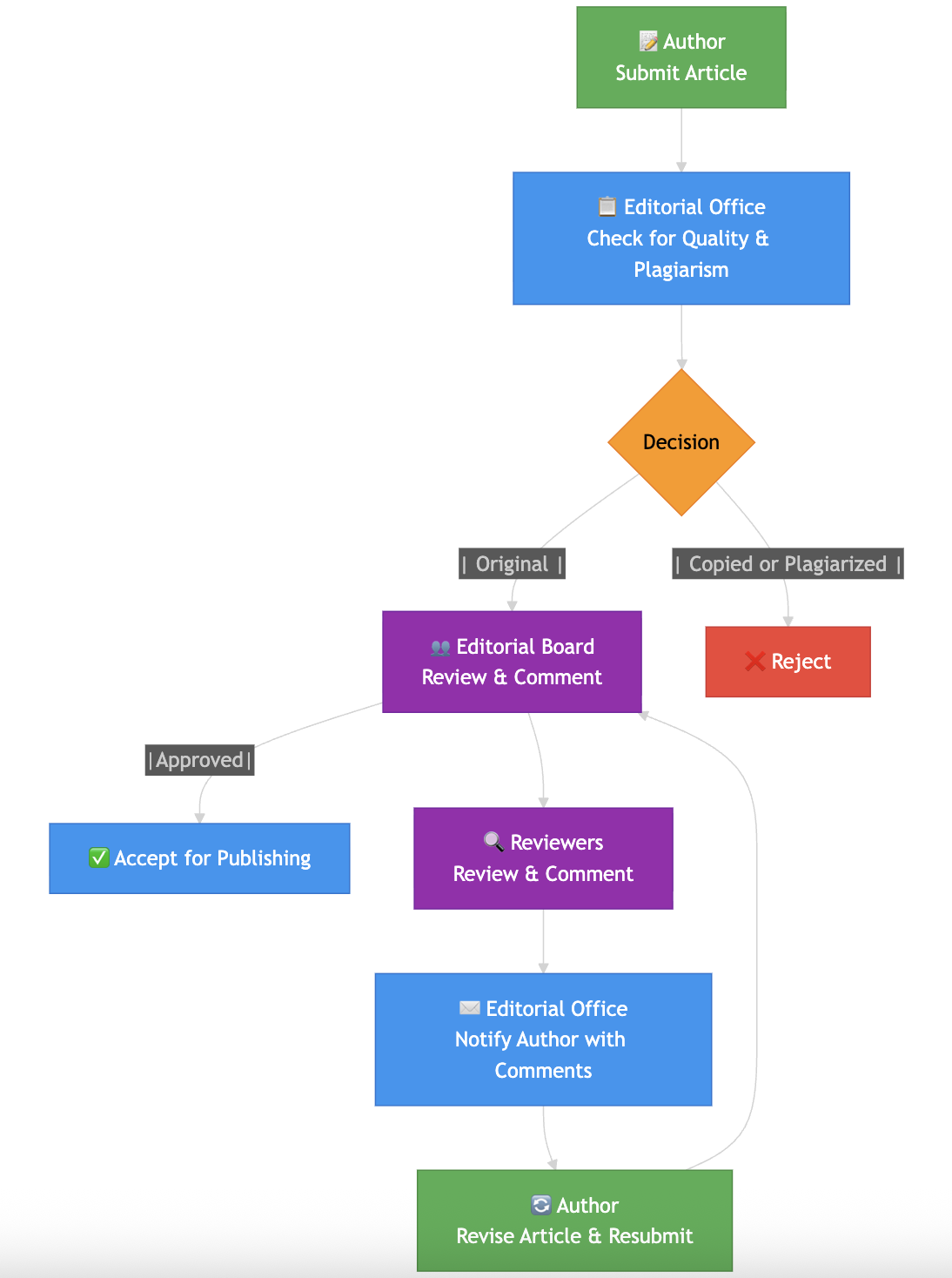
Editorial and Peer-Review Policy
Advances in Medicine and Rehabilitation Sciences
follows the editorial and peer-review procedures described in the
journal's policies and author guidelines. Manuscripts are assessed
for relevance to the journal's scope, originality, scientific merit,
methodological considerations, ethical compliance, and suitability
for publication.
Key features include:
-
Manuscripts are evaluated by appropriate reviewers and/or editors
with relevant subject expertise, according to the journal's
stated peer-review model.
-
The applicable peer-review model and reviewer confidentiality
arrangements are described in the journal's policies.
-
Editorial assessment considers scientific relevance, originality,
methodological quality, ethical compliance, and alignment with
the journal's scope.
-
Manuscripts undergo appropriate originality, plagiarism, and
research-integrity checks before or during the editorial process.
-
Final publication decisions are made by the responsible editor
in accordance with the journal's editorial policies and the
outcome of the applicable review process.
Publication Frequency & Format
The journal's publication frequency is
Annual (One issue per year).
Accepted articles are made available online in HTML and PDF formats
following completion of the applicable editorial and production processes,
supporting accessible and timely dissemination of published research.
Open Access Policy
Advances in Medicine and Rehabilitation Sciences
operates under an open-access publishing model. Published content is
freely accessible to readers without subscription or paywall
restrictions, subject to the applicable journal policies and licensing
terms.
Copyright, licensing, and reuse rights are governed by the terms
specified for the journal and individual published content.
Indexing & Archiving
The Advances in Medicine and Rehabilitation Sciences
seeks to make its published research discoverable through appropriate
scholarly indexing, abstracting, and discovery services. Inclusion in
any external indexing or abstracting service is subject to the
eligibility requirements, evaluation procedures, and acceptance
decisions of the respective service.
The journal is committed to maintaining accurate article metadata,
persistent identifiers, accessible article landing pages, and the
continued availability of published scholarly content.
Information about indexing, abstracting, discovery, and preservation
services is provided on a service-specific basis and is updated when
the relevant status has been established and verified.
Manuscript Submission
Authors are encouraged to submit their manuscripts through the journal's Online Submission
System (Submit Manuscript).
Manuscripts must adhere to the journal's author guidelines regarding structure, formatting,
referencing style, ethical approvals, and necessary disclosures (such as conflicts of interest
and funding).
Publication Ethics & Integrity
Advances in Medicine and Rehabilitation Sciences follows internationally recognized standards for publication ethics and research integrity,
which include (but are not limited to):
- Make sure you have ethical approval.
- Ensure that informed consent is obtained where required and protect the confidentiality and privacy of participants and research subjects.
- Declare any conflicts of interest.
- Be transparent about data availability.
- Clarify authorship criteria and the roles of contributors.
- Conduct anti-plagiarism checks.
- Have a clear policy for retraction and correction.










 Abstract
 HTML
HTML
 PDF
PDF