About the Journal
Overview
The Journal of Climate and Green Innovation is a journal that people around the world can read. It is checked by experts and it is free to read. The Journal of Climate and Green Innovation wants to share information about climate change and how we can make the world a cleaner place. The Journal of Climate and Green Innovation is looking at ideas and technologies that can help us deal with climate change. It wants to help the world switch to systems that're better for the environment. The journal is looking to the future. Trying to find new solutions to our problems. It is focusing on the results of research and new ideas than just looking at what is already being done to protect the environment. The Journal of Climate and Green Innovation is, about finding new ways to make the world a greener place. The Journal of Climate and Green Innovation is worried about climate change and what it is doing to the world. This is also affecting our systems and economy. Climate change is a problem for energy, industry and infrastructure. It is also a problem for ecosystems and governance. The Journal of Climate and Green Innovation thinks that climate change is changing the world and this is having an impact on our systems and economy.
The Journal of Climate and Green Innovation will put out research articles about climate change that have been checked by experts. They will also publish reviews and short reports about technology. The Journal of Climate and Green Innovation will share studies, about situations and what people think about climate change policies. These will be written from the climate scientist, engineer, technologist, economist, urban planner, entrepreneur, climate strategist, and other sustainability scientist and innovation practitioner.
Journal of Climate and Green Innovation examines climate change, focusing on energy, industry, and construction. They also explore self-governance, examining how to mitigate climate change. Journal of Climate and Green Innovation collates interdisciplinary research incorporating new science and technology solutions to assist with climate change. This research combines climate change solutions with digital design tools, funding, and policies to create actionable frameworks. Journal of Climate and Green Innovation focuses on climate change and examines collaboration to mitigate its impact.
People can obtain informative resources from the Journal of Climate and Green Innovation. Informative resources include articles and reviews which provide actionable recommendations. The Journal of Climate and Green Innovation publishes research and reports which assess possible future scenarios. Climate scientists and experts from other fields such as engineering, technology, and economics, as well as planners, policymakers, and environmentalists who also practice business, are the professionals The Journal of Climate and Green Innovation seeks to obtain information from. The Journal of Climate and Green Innovation primarily aims to address the challenges of climate change and, in fact, is about the challenges of climate change. Actionable and innovative proposals to combat climate change are the types of contributions from practitioners of science which the Journal of Climate and Green Innovation most values.
The journal has been focusing on green innovation, climate-neutral pathways, and system transformation as it seeks to close the research, deployment, and impact divide. In the rapidly developing and climate-vulnerable areas, the open-access system of the Journal of Climate and Green Innovation journal allows for knowledge to be exchanged and shared for visibility and impact. Journal of Climate and Green Innovation will promote innovation and share knowledge across the board: academia, industry, governments, and civil society.
Aim and Scope
The Journal of Climate and Green Innovation (JCGI) focuses on the latest research and the applied innovations that assist climate mitigation, climate adaptation, and the transitions to sustainable, low-emission, and climate-resilient systems. The journal emphasizes interdisciplinary and problem-solving research that combines climate science and green technologies, digital innovations, policy frameworks, and socioeconomic transformation.
Climate Science, Climate Systems & Future Projections
To understand how the climate works we need to think about what the future might look like. We make guesses about what could happen and try to figure out what is coming next. The climate is full of surprises, like bad weather and sudden changes. This is part of the climate. It is not a global problem. The climate affects different places and industries in different ways. We need to look at how the climate will affect each region and industry to understand what is going on with the climate.
Climate Change Mitigation & Decarbonization Pathways
The push for net-zero is really happening. People are very excited about making the switch to carbon-neutral and finding ways to reduce emissions in every area. New technologies that help reduce emissions are being developed quickly. There are ways to reduce carbon in big industries. One of these ways is carbon capture, utilization and storage which is also known as CCUS. Net-zero is the goal and people have plans to remove emissions from the air for good. Net-zero is what everyone is talking about. It is all, about reducing emissions.
Green Innovation & Clean Technologies
The green economy is really moving forward because of innovation. We are seeing technology that is good for the climate and designs that are good for the earth everywhere. New materials are being made that help with stopping climate change. It is not always easy to get these ideas out of the laboratory and, into our daily lives. The green economy and innovation are important. When we try to make these new technologies bigger and get them ready to sell the green economy and innovation face problems.
Renewable Energy & Climate-Smart Energy Systems
Clean energy is really important now. We are talking about energy, wind energy, hydrogen energy, bioenergy and hybrid systems. People are coming up with ways to store energy build grids that can adapt and generate power in different places. It is also important to use energy so we need to make things more efficient. Climate change is already causing problems for energy systems so we need to find ways to deal with that. Clean energy is the key, to making all of this work.
Climate Adaptation, Resilience & Nature-Based Innovation
Climate change is not something we need to stop it is also about living with the changes that have already happened. We need to build things like roads and buildings that can withstand the effects of climate change. We also need to use things that nature provides to help us. We need to be smarter about how we use the land, water and the areas near the ocean. Some places are going to have a time with climate change than other places so we need to make plans for how to adapt to these changes. Climate change is a problem and we need to think about how to deal with it in our daily lives and, in the places where we live.
Green Industry, Circular Economy & Sustainable Manufacturing
Industries are getting greener, switching to low-carbon processes and embracing circular economy ideas to cut waste. Innovations in resource efficiency, clean production, and life-cycle design are changing how things get made. It’s all about closing the loop and making manufacturing truly sustainable.
Climate Policy, Governance & Innovation Frameworks
Policy shapes everything. Tools like climate policy instruments and regulatory updates set the stage. Countries report their progress through Nationally Determined Contributions (NDCs) and work together globally. Innovation thrives where public and private sectors team up.
Climate Finance, Green Investment & ESG
Innovative financing methods are quickly evolving. New financial techniques paired with advanced market analytics focused on pricing, carbon markets, and ESG compliance are shaking up traditional methods. These improvements allow for enhanced climate-related risk reporting and offer investors a clearer understanding. In climate-focused financing, investors want to see actionable, measurable results.
Urban Climate Solutions & Smart Green Cities
Urban planners need to think outside the box as cities are at the front lines of climate change. Climate-smart design, green buildings, and low-carbon construction, though still fresh, are paving the way for the future. Resilient building and tackling urban heat are more crucial than ever. Climate change and the shocks associated with it are new problems that smart-city tech needs to address.
Digital Innovation, AI & Climate Intelligence
The rulebook has been rewritten with new technologies. Using AI, machine learning, and big data to develop new solutions for climate challenges is now a must. Climate informatics helps decision makers and leaders think smarter. Digital twins allow us to virtually see climate and infrastructure challenges prior to construction. Instant climate monitoring and remote sensing turn data into actionable information.
Climate–Society–Economy Interface
Climate change affects all aspects of life and has tangible social and economic consequences. The change is driven by people and their actions. A just transition is one in which no one is left behind. This is where equity and inclusion come in. Climate solutions are being pioneered by communities and indigenous peoples themselves.
Green Mobility & Sustainable Transport
The methods of transportation and how we carry them out are meeting sustainability standards at record speed. Electric and alternative fuel automobiles are becoming commonplace. Efforts to integrate smarter logistics and innovative solutions continue to reduce transport emissions. The need to completely decarbonize our transport systems is the highest priority. The emissions framework throughout the whole value chain keeps everyone accountable.
Innovation Case Studies & Translational Research
Big ideas need to work in the real world. Pilot projects and demo studies show what’s possible, and then pave the way to bigger change. Industry-led case studies highlight practical climate solutions. And bridging the gap from policy or lab breakthroughs to real-world impact—that’s where the magic happens.
Editorial and Peer-Review Policy
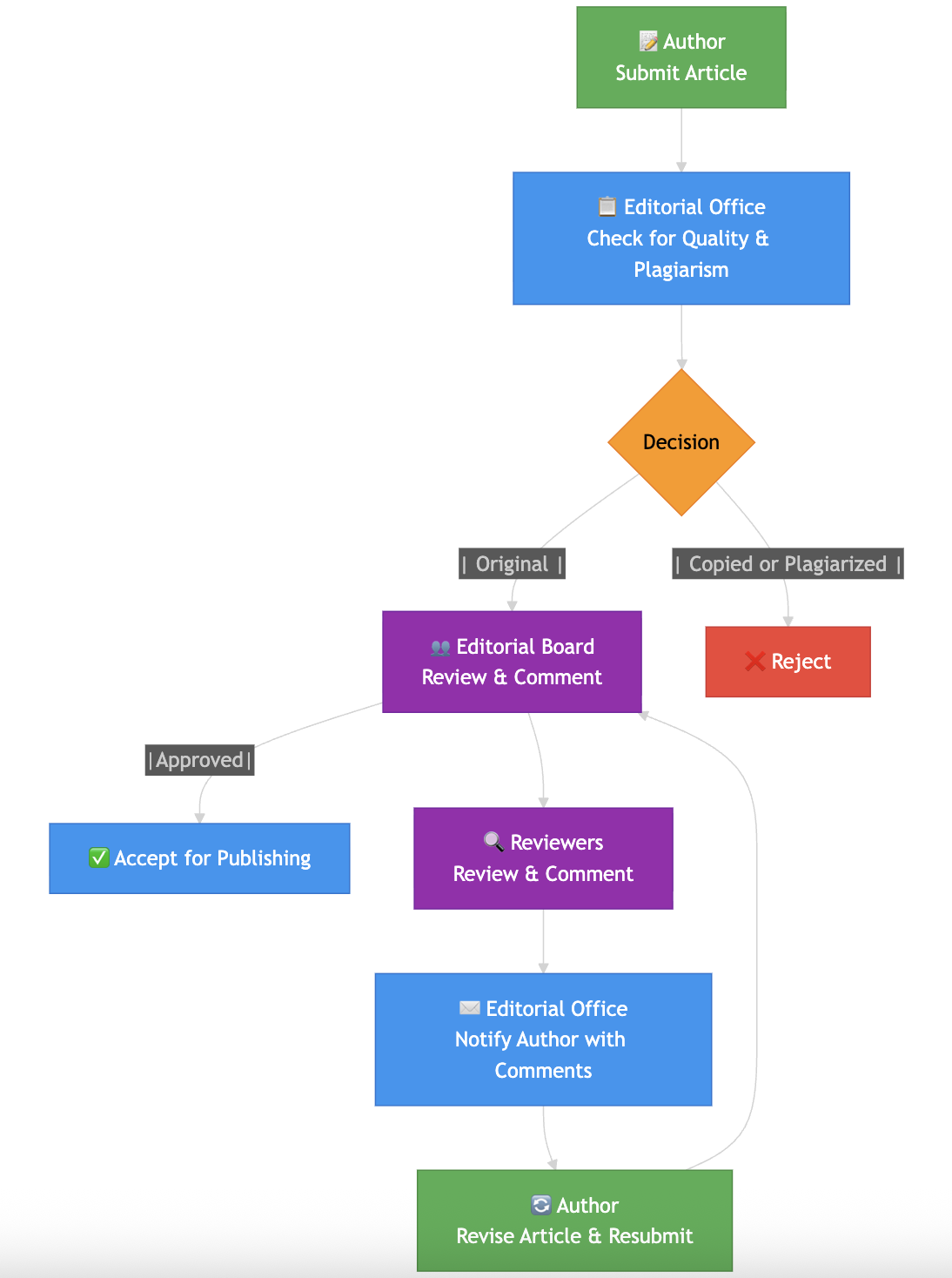
Journal of Climate and Green Innovation adheres to a strict single-blind peer-review process to maintain the quality, integrity,
and scientific validity of all published work.
Key features include:
-
Each manuscript is reviewed by at least two independent experts in the field,
along with an academic editor.
-
Reviewers know who the authors are, but the authors remain unaware of the reviewer's
identities.
-
The evaluations emphasize scientific merit, originality, methodological rigor, ethical
compliance, and how well the work fits within the journal's scope.
-
Every submission goes through plagiarism checks and ethical compliance assessments
before the review process begins.
-
The final decision on publication is based on the reviewer's recommendations and the
editor's evaluation.
Publication Frequency & Format
This journal comes out Bi-Annual (Two issues per year). Accepted articles are
made available online in both HTML and PDF formats, ensuring that scholarly work is accessible
and disseminated promptly.
Open Access Policy
Journal of Climate and Green Innovation operates under a fully open access model. This means all published content is freely
accessible to readers around the globe, without any subscription or paywall. Authors maintain
the copyright to their work, and the content is shared under an appropriate open-access license.
Indexing & Archiving
Journal of Climate and Green Innovation is dedicated to upholding high standards with the goal of being included in reputable
scientific indexing and abstracting services. The journal also ensures long-term digital
preservation through recognized archives and repositories, guaranteeing permanent access and
discoverability.
Manuscript Submission
Authors are encouraged to submit their manuscripts through the journal's Online Submission
System (Submit Manuscript) or by emailing them directly to the
Editorial Office at
support@globalmeetx.com.
Manuscripts must adhere to the journal's author guidelines regarding structure, formatting,
referencing style, ethical approvals, and necessary disclosures (such as conflicts of interest
and funding).
Publication Ethics & Integrity
Journal of Climate and Green Innovation follows internationally recognized standards for publication ethics and research integrity,
which include (but are not limited to):
- Make sure you have ethical approval.
- Ensure informed consent and guarantee confidentiality.
- Declare any conflicts of interest.
- Be transparent about data availability.
- Clarify authorship criteria and the roles of contributors.
- Conduct anti-plagiarism checks.
- Have a clear policy for retraction and correction.