About the Journal
Overview
The
Clean Energy Innovation and Green Technologies is a peer-reviewed, international open-access publication committed to advancing the global shift toward sustainable energy systems and environmentally responsible technologies. As nations and industries confront rising energy demands, climate challenges, and the urgent need for decarbonization, the journal provides an authoritative platform for researchers, innovators, and decision-makers to share pioneering insights and transformative solutions.
This journal showcases scholarly work that accelerates progress in clean energy science, sustainable engineering, and next-generation green technologies. It publishes original research articles, state-of-the-art reviews, design innovations, policy evaluations, applied engineering studies, and in-depth case analyses. Contributions that integrate scientific knowledge with practical implementation, industry application, and strategic sustainability planning are especially encouraged.
The scope of the journal spans a wide and dynamic range of energy and environmental domains, including renewable power systems, advanced energy storage, hydrogen technologies, smart grid intelligence, low-emission industrial practices, eco-friendly materials, and digital tools that enhance efficiency and resilience. The journal also highlights research shaping emerging green economies, from carbon-smart manufacturing to circular resource systems, green mobility transitions, and climate-adaptive infrastructure.
Core themes include (but are not limited to):
- Solar, wind, hydro, geothermal, and bio-based renewable energy
- Battery science, storage materials, and energy retention technologies
- Hydrogen production, fuel cells, and next-generation sustainable fuels
- Intelligent grid architectures, microgrids, and energy management systems
- Carbon reduction, CCUS innovations, and emission-minimizing technologies
- Greener manufacturing pathways and sustainable industrial engineering
- Waste valorization, waste-to-energy solutions, and circular economy integration
- Electric vehicles, alternative transportation systems, and mobility innovation
- Net-zero building design, urban green transitions, and resilient infrastructure
- Digital energy tools including AI, IoT, robotics, and data analytics
- Policy mechanisms, regulatory innovation, clean-energy finance, and energy equity
To uphold the highest academic standards, all manuscripts undergo a rigorous single-blind peer-review conducted by domain experts. Its open-access model ensures that each published article is freely available to global audiences, supporting equitable dissemination of knowledge and encouraging collaboration among scientific, governmental, and industrial communities.
The Clean Energy Innovation and Green Technologies is especially committed to amplifying research from developing countries, early-stage innovators, and regions where clean energy advancement can create transformative social and environmental impact. By harmonizing scientific research with real-world solutions, the journal aims to contribute meaningfully to global climate objectives and the transition toward a sustainable, low-carbon future.
As innovation accelerates and the demand for resilient energy systems grows, this journal serves as a vital conduit for visionary research, practical breakthroughs, and strategic thinking. Whether exploring futuristic energy storage, designing smart sustainable cities, engineering low-carbon technologies, or evaluating global energy policy, contributors will find a dynamic and influential platform to shape the next era of green technological evolution.
Aim and Scope
The Journal of Clean Energy Innovation and Green Technologies publishes original research articles, reviews, short communications, case studies, and technical perspectives that explore all aspects of sustainable energy systems and environmentally friendly technologies. We welcome submissions across a wide range of thematic areas, including (but not limited to):
Renewable Energy Systems & Advanced Energy Conversion
- Solar, wind, hydro, geothermal, and biomass energy technologies
- High-efficiency photovoltaic materials, next-generation solar cells, and hybrid energy systems
- Innovative turbine designs, bioenergy conversion processes, and renewable power architectures
Energy Storage Materials & Technologies
- Batteries, supercapacitors, hydrogen storage, and fuel cell systems
- Materials design for high-capacity storage, solid-state electrolytes, and advanced redox systems
- Energy storage integration, lifecycle performance, and degradation analysis
Green Materials & Sustainable Engineering
- Eco-friendly materials, biodegradable polymers, and bio-based composites
- Green chemistry approaches for cleaner production and reduced environmental impact
- Circular economy materials, waste valorization, and sustainable manufacturing processes
Environmental Remediation & Pollution Control Technologies
- Air, water, and soil purification techniques using advanced materials
- Photocatalysis, adsorption technologies, and bioremediation systems
- Pollution reduction strategies and treatment technologies for industrial waste
Smart Grids, Energy Efficiency & Intelligent Systems
- Smart grid design, demand-side management, and energy digitalization
- AI/ML applications for predictive energy optimization and system reliability
- Energy-efficient architectures, building systems, and smart infrastructure
Hydrogen Technologies & Carbon Neutrality Solutions
- Green hydrogen production, storage, and utilization
- Fuel cell innovation, hydrogen safety, and infrastructure development
- Carbon capture, utilization, and storage (CCUS) technologies for net-zero pathways
Climate Change Mitigation & Sustainability Strategies
- Low-carbon technologies, emission reduction frameworks, and decarbonization models
- Environmental impact assessment, lifecycle analysis, and sustainable policy development
- Renewable integration in agriculture, transportation, and industrial sectors
Emerging, Interdisciplinary & Applied Green Technologies
- Clean tech solutions for water purification, waste management, and eco-industrial systems
- Green robotics, bio-inspired engineering, and smart environmental monitoring devices
- Policy, regulation, risk assessment, and ethical considerations in green innovation
Editorial and Peer-Review Policy
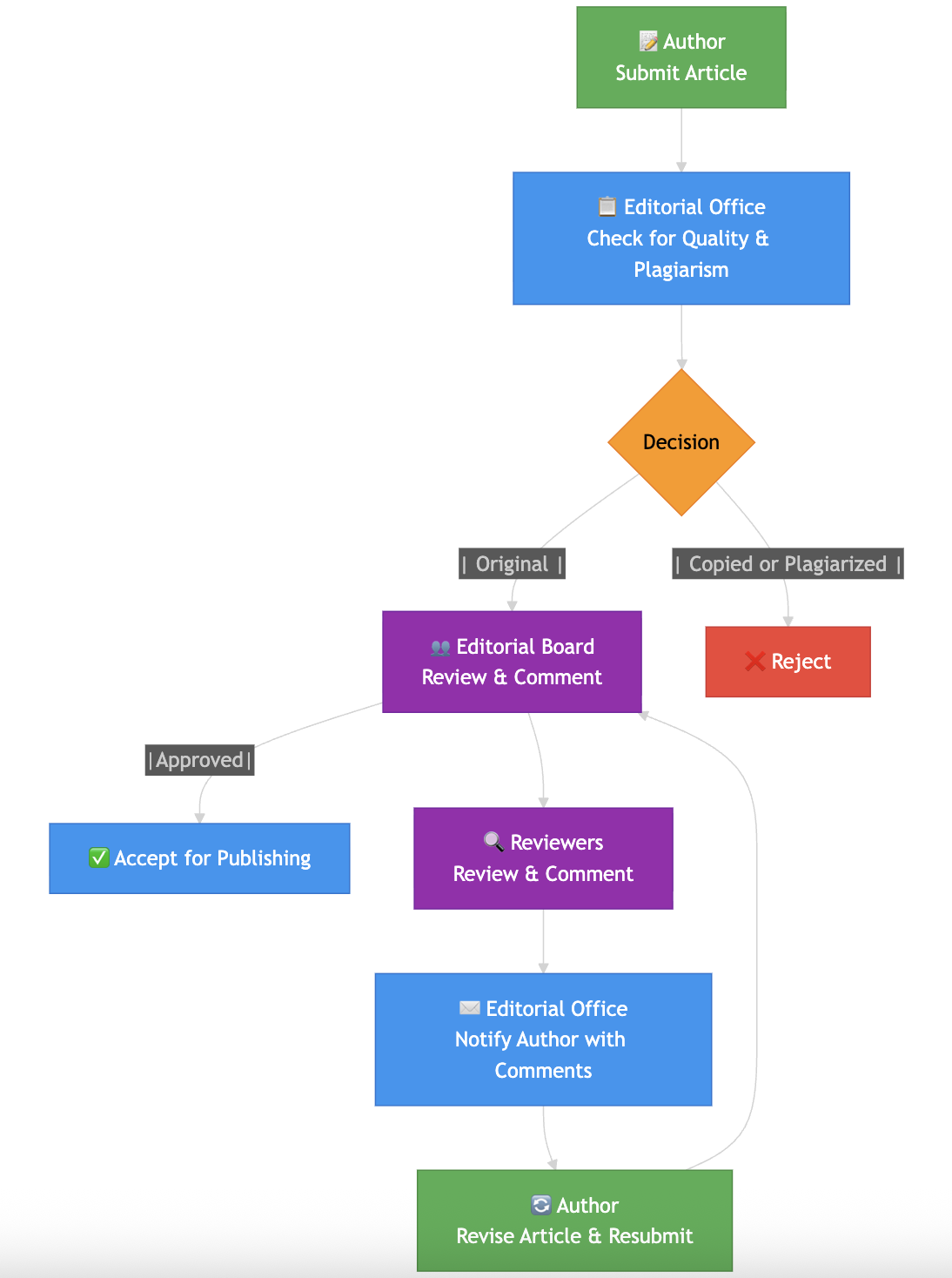
Journal of Environmental Sciences and Sustainability adheres to a strict single-blind peer-review process to maintain the quality, integrity,
and scientific validity of all published work.
Key features include:
-
Each manuscript is reviewed by at least two independent experts in the field,
along with an academic editor.
-
Reviewers know who the authors are, but the authors remain unaware of the reviewer's
identities.
-
The evaluations emphasize scientific merit, originality, methodological rigor, ethical
compliance, and how well the work fits within the journal's scope.
-
Every submission goes through plagiarism checks and ethical compliance assessments
before the review process begins.
-
The final decision on publication is based on the reviewer's recommendations and the
editor's evaluation.
Publication Frequency & Format
Journal of Environmental Sciences and Sustainability publishes three times a year, adhering to a tri-annual schedule. Accepted articles are
made available online in both HTML and PDF formats, ensuring that scholarly work is accessible
and disseminated promptly.
Open Access Policy
Journal of Environmental Sciences and Sustainability operates under a fully open access model. This means all published content is freely
accessible to readers around the globe, without any subscription or paywall. Authors maintain
the copyright to their work, and the content is shared under an appropriate open-access license.
Indexing & Archiving
Journal of Environmental Sciences and Sustainability is dedicated to upholding high standards with the goal of being included in reputable
scientific indexing and abstracting services. The journal also ensures long-term digital
preservation through recognized archives and repositories, guaranteeing permanent access and
discoverability.
Manuscript Submission
Authors are encouraged to submit their manuscripts through the journal's Online Submission
System (Submit Manuscript) or by emailing them directly to the
Editorial Office at
support@globalmeetx.com.
Manuscripts must adhere to the journal's author guidelines regarding structure, formatting,
referencing style, ethical approvals, and necessary disclosures (such as conflicts of interest
and funding).
Publication Ethics & Integrity
Journal of Environmental Sciences and Sustainability follows internationally recognized standards for publication ethics and research integrity,
which include (but are not limited to):
- Make sure you have ethical approval.
- Ensure informed consent and guarantee confidentiality.
- Declare any conflicts of interest.
- Be transparent about data availability.
- Clarify authorship criteria and the roles of contributors.
- Conduct anti-plagiarism checks.
- Have a clear policy for retraction and correction.